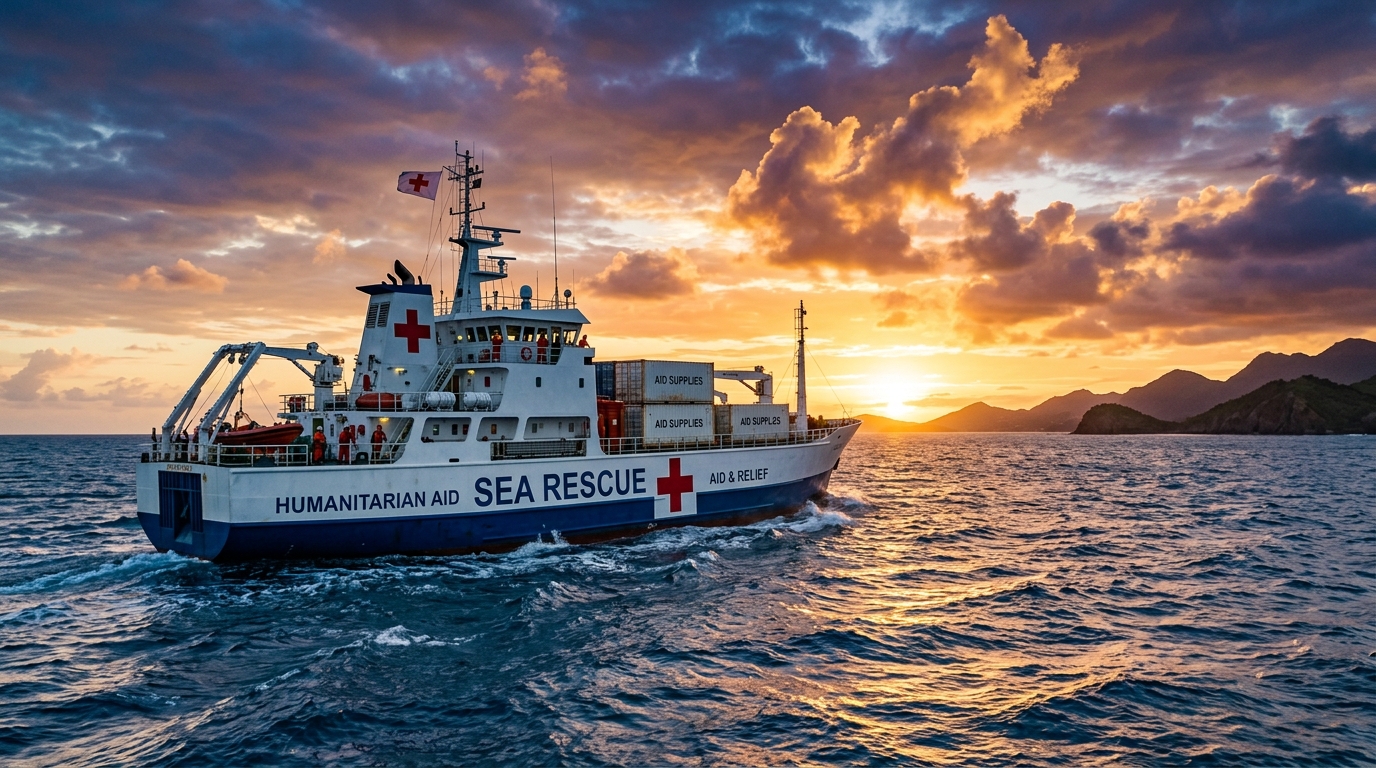
Two Cuba-Bound Aid Ships Found Safe Days After Disappearing
Featured Snippet Summary: Two boats carrying urgent humanitarian aid from Mexico to Cuba, the Friendship and Tigger Moth, have been safely located by the Mexican Navy after losing contact for several days. The vessels, manned by an international crew of nine, are now continuing their journey to Havana to deliver critical supplies amid Cuba’s ongoing energy and supply crisis.
Introduction
In a wave of relief for families and humanitarian organizations, two aid ships bound for Cuba have been found safe after a tense multi-day disappearance. The vessels, named Friendship and Tigger Moth, departed from Isla Mujeres, Mexico, on March 20th, heavily laden with much-needed humanitarian supplies. When communication with the boats abruptly ceased, fears mounted over the fate of the nine-person international crew.
Fortunately, the Mexican Navy recently confirmed that an aircraft spotted the ships approximately 80 nautical miles from Havana. The successful location of these Cuba-bound aid ships highlights the precarious nature of civilian aid missions in the Caribbean, especially against the backdrop of heightened geopolitical tensions and severe domestic crises within Cuba.
The Disappearance and Discovery
The journey across the Caribbean is notoriously unpredictable, but the sudden silence from the Friendship and Tigger Moth was cause for immediate alarm.
Losing Contact in the Caribbean
The two ships, operating under the banner of the Nuestra America Convoy, were scheduled to arrive in Havana early in the week. However, shortly after their departure from Mexico’s Quintana Roo state, all radio contact was lost. The nine crew members aboard hail from Poland, France, Cuba, and the United States, making this an international humanitarian effort.
The Mexican Navy Intervenes
Following days of uncertainty, a Mexican Navy surveillance aircraft successfully located the vessels. The Navy swiftly established radio contact and dispatched a support vessel to the area to ensure the safety of the crew and the integrity of the cargo. A spokesperson for the Nuestra America Convoy has since confirmed that all crew members are unharmed and that the ships are proceeding to their final destination.
The Context: Cuba’s Deepening Crisis
The mission of these aid ships cannot be fully understood without examining the dire situation currently unfolding in Cuba.
The Impact of the Oil Blockade
Since January, the United States has imposed strict measures affecting oil shipments to the communist-run island. Following the U.S. seizure of former Venezuelan President Nicolás Maduro, a key supplier of subsidized oil to Havana, Cuba has faced a catastrophic energy shortage. U.S. President Donald Trump has further threatened tariffs on any nation supplying oil to the island, intensifying the economic squeeze.
Humanitarian Consequences
The lack of fuel has had a domino effect across Cuban society. The United Nations has described the supply shortages as “dire.” The nation’s aging power grid has suffered multiple nationwide blackouts, severely impacting essential services. Over 50,000 surgical procedures have reportedly been canceled due to power and supply constraints. Coupled with severe shortages of food, medicine, and baby formula, the daily reality for millions of Cubans has become a struggle for survival, occasionally sparking rare public protests.
The Role of Independent Aid Convoys
In response to the escalating crisis, non-governmental organizations and volunteer groups have stepped up to fill the void.
Civilian Relief Efforts
The Friendship and Tigger Moth are part of a broader grassroots movement aiming to deliver direct relief. Earlier this week, the Cuban government welcomed another aid vessel, symbolically named “Granma 2.0,” which successfully delivered 14 tonnes of crucial supplies, including solar panels, medicine, and food.
Geopolitical Tensions and the Future
The fate of Cuba remains heavily entangled with U.S. foreign policy.
The U.S. Stance
U.S. Secretary of State Marco Rubio recently addressed the situation, denying the existence of a physical naval blockade. He attributed Cuba’s crisis to its reliance on subsidized oil from foreign allies and its failure to modernize infrastructure dating back to the 1950s. Rubio emphasized that systemic political and economic changes within Cuba are necessary prerequisites for a better future, a stance that the Cuban government vehemently rejects, insisting its political system is non-negotiable.
Conclusion
The safe discovery of the two Cuba-bound aid ships is a localized victory in a much larger, complex geopolitical struggle. As the Friendship and Tigger Moth finally approach Havana, their cargo will undoubtedly provide essential, albeit temporary, relief to a population in desperate need. The incident underscores the critical importance of humanitarian aid channels, even as diplomatic tensions continue to rise.