Once upon a time, when children were asked what they wanted to be when they grew up, they said astronauts or doctors. Today, the most common answer is “YouTuber” or “Influencer.” *Cue the collective groan of every parent in the western hemisphere.* And honestly? You can’t blame them. Who wouldn’t want to get paid millions of dollars to take aesthetically pleasing photos of their brunch in a 5-star hotel in Dubai?
But pull back the velvet curtain of perfectly curated feeds and sponsored teeth-whitening kits, and a much darker reality emerges. Influencer culture isn’t an escape from the rat race; it’s just the rat race repackaged with ring lights. Let’s talk about the modern digital colosseum, where creators bleed for likes, and massive corporations reap the profits.

1. The Illusion of Being the Boss
The primary hook of the creator economy is the promise of independence: “Be your own boss!” “Monetize your passion!” “Escape the 9-to-5!” It sounds incredible. But when you become a full-time influencer, you don’t escape having a boss. You simply trade a human boss for an algorithmic one.
Your new boss doesn’t care if you have the flu. Your new boss doesn’t respect weekends. If you stop posting for three days, your reach drops by 40%. The influencer lifestyle is an exhausting, 24/7 grind where you are constantly producing content to appease an invisible mathematical equation that could change the rules tomorrow without warning. You aren’t independent; you are an unpaid employee of a massive tech conglomerate until they decide to throw you a few pennies in ad revenue.
(If this sounds familiar, it’s because it’s the exact same psychological trap we discussed in The Productivity Trap—just dressed up in designer clothing.)
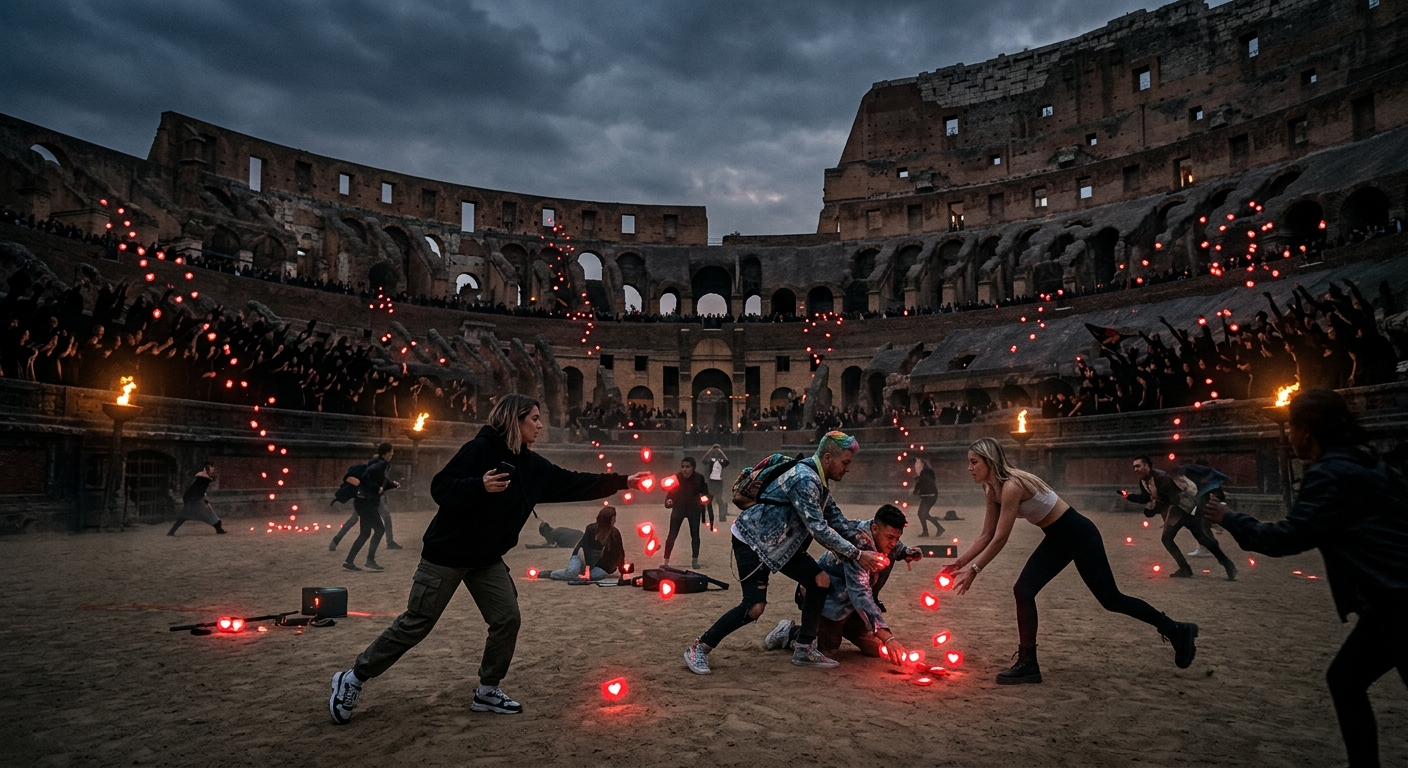
2. Gladiators Fighting for Hearts
Imagine a giant arena. In the center are millions of creators screaming, dancing, crying, and performing dangerous stunts. In the stands sits the Algorithm, deciding who lives (goes viral) and who dies (gets shadowbanned). This is the digital colosseum.
In the pursuit of maintaining relevance, the stunts have to get wilder, the opinions have to get more extreme, and the vulnerability has to become completely weaponized. People are literally crying into their front-facing cameras because trauma pays better than joy. It is a race to the bottom of the human psyche, and the prize is just enough digital dopamine to keep you coming back to the arena tomorrow.
(This need for constant, escalating stimulation is why we are all exhausted. We covered this phenomenon in Infinite Scrolling, Zero Progress.)
3. Renting Your Audience
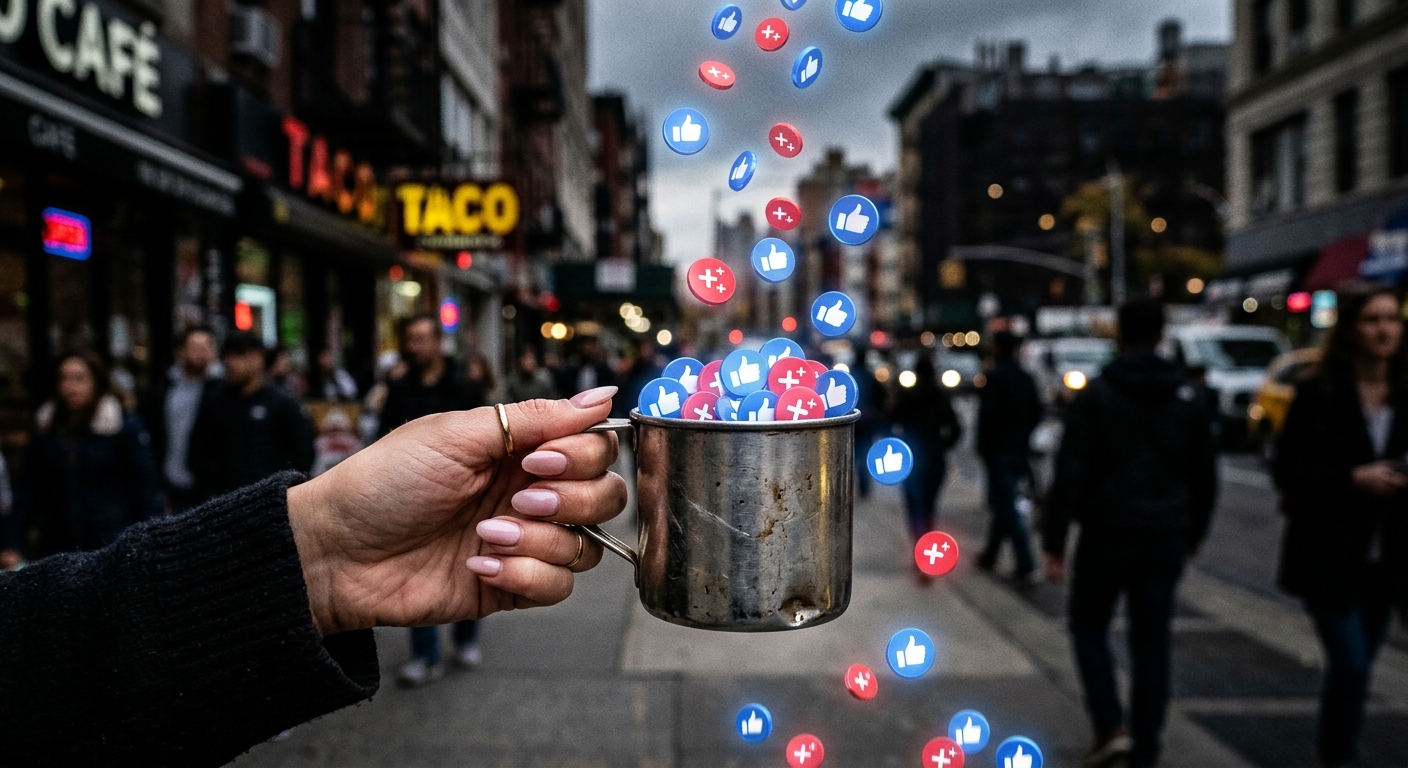
Here is the most terrifying reality for anyone trying to build an empire on social media: you don’t own your audience. You are just renting access to them from a massive tech monopoly.
If you have three million followers on a platform, and that platform decides to change its algorithm to favor short-form video instead of photos, your business can evaporate overnight. You are building a beautiful, expensive mansion on land owned by a fickle billionaire. When we idolize influencer culture, we are idolizing extreme vulnerability masquerading as power. The true winners in the creator economy are not the creators; they are the platforms that sell ads against the creators’ free labor.
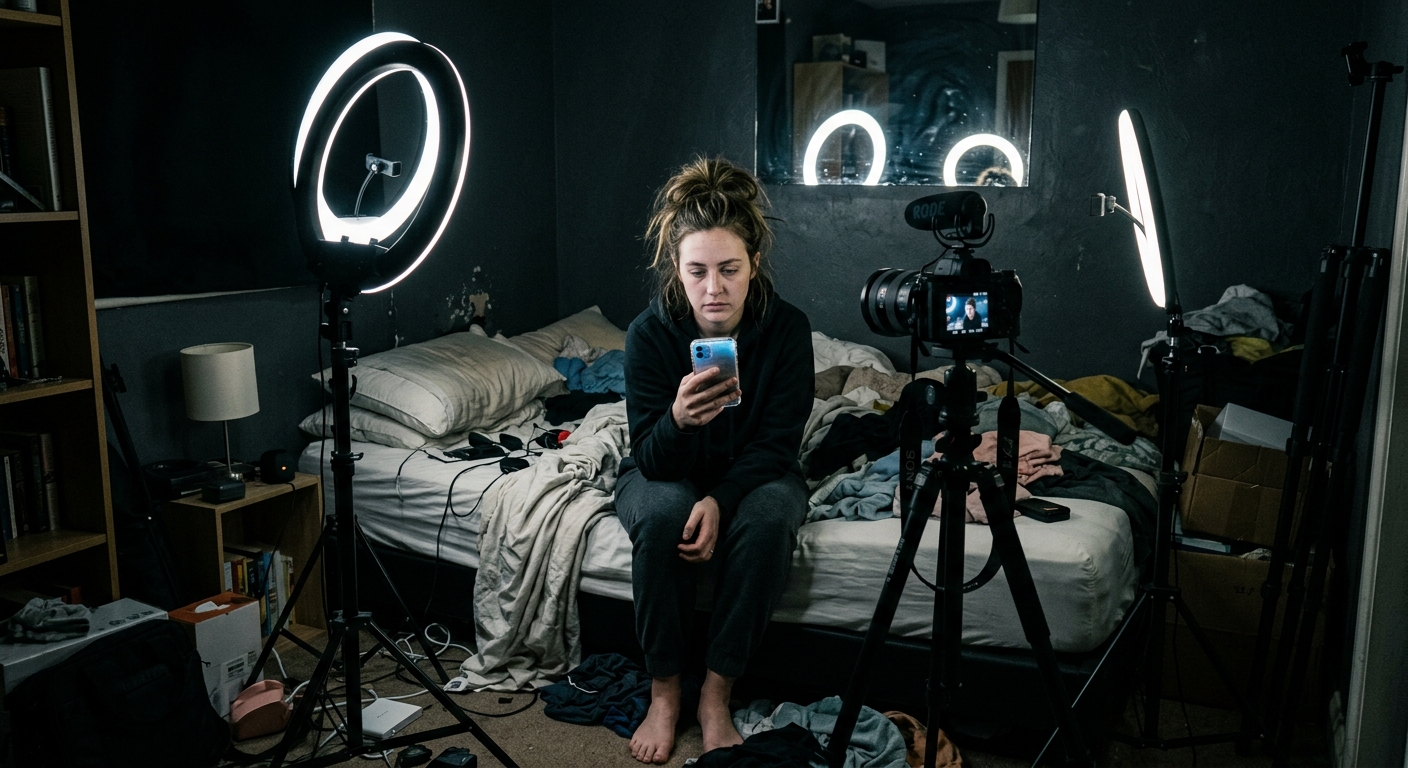
4. Dropping the Ring Light
So, what do we do about it? If you are a consumer, the best thing you can do is recognize the performance for what it is. Stop comparing your messy, unedited real life to someone’s highly produced, sponsored highlight reel. They aren’t living better than you; they just have a better camera angle.
If you are a creator, or aspire to be one, the key is ownership. Move your audience off the rented land. Build an email list. Create your own website. Stop begging for digital scraps in the colosseum and start building your own arena.
The ring light looks glamorous from the outside, but it gets awfully hot when it’s pointed at you 24 hours a day.