Let’s play a fun game of ‘Where did my morning go?’ You wake up, grab your phone ‘just to check the weather,’ and suddenly it’s 45 minutes later and you’re watching a teenager in Ohio review an air fryer. How did you get there? You didn’t drive. You were escorted by the most efficient, ruthless prison guard in modern history: The Algorithm.
We’re no longer talking about simple timelines that show what your friends had for dinner. We are dealing with billion-dollar machines designed to hijack human psychology. Welcome to the invisible prison of the 21st century, where the walls are made of code and the algorithm is the new warden. You aren’t a guest in this digital jail; you’re the main attraction.

1. The Warden You Never See
In a traditional jail, the warden tells you when to eat, sleep, and walk in the yard. In our digital jail, the warden is much more subtle. It watches how long your thumb hovers over a video of a golden retriever before scrolling past. It calculates your exact political leanings based on a joke you liked in 2019. It knows you better than your spouse does.
Every time you interact with an app, you’re leaving a fingerprint on the cell bars. This data is fed back into the machine to serve you the exact content needed to keep you trapped in the infinite scroll. The goal isn’t to educate you or make you happy; the goal is retention. The warden’s only job is to ensure you never, ever log off.
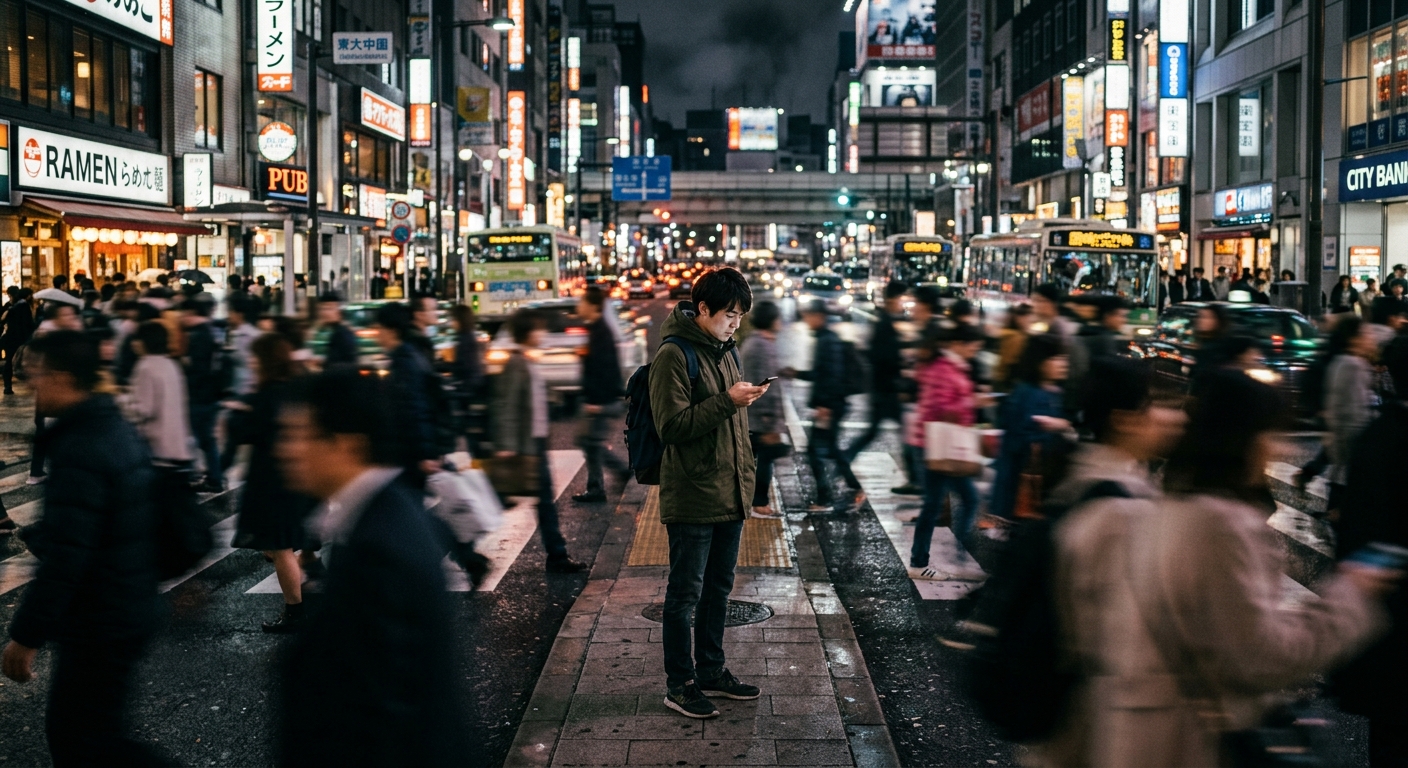
2. Solitary Confinement in a Crowded Room
Here is the brilliant, terrifying paradox of social media addiction: it connects you to a billion people while leaving you completely alone. It’s the digital equivalent of solitary confinement, but they left the TV on loud enough to drown out your thoughts.
When the algorithm learns what you believe, it builds an echo chamber around you. It stops showing you opposing viewpoints. It feeds your outrage, your fears, and your biases because outrage is incredibly profitable. You begin to believe that the entire world thinks exactly like you do, or worse, that everyone who disagrees with you is an existential threat. You are isolated in a padded cell of your own opinions, completely disconnected from the nuanced reality of human connection.
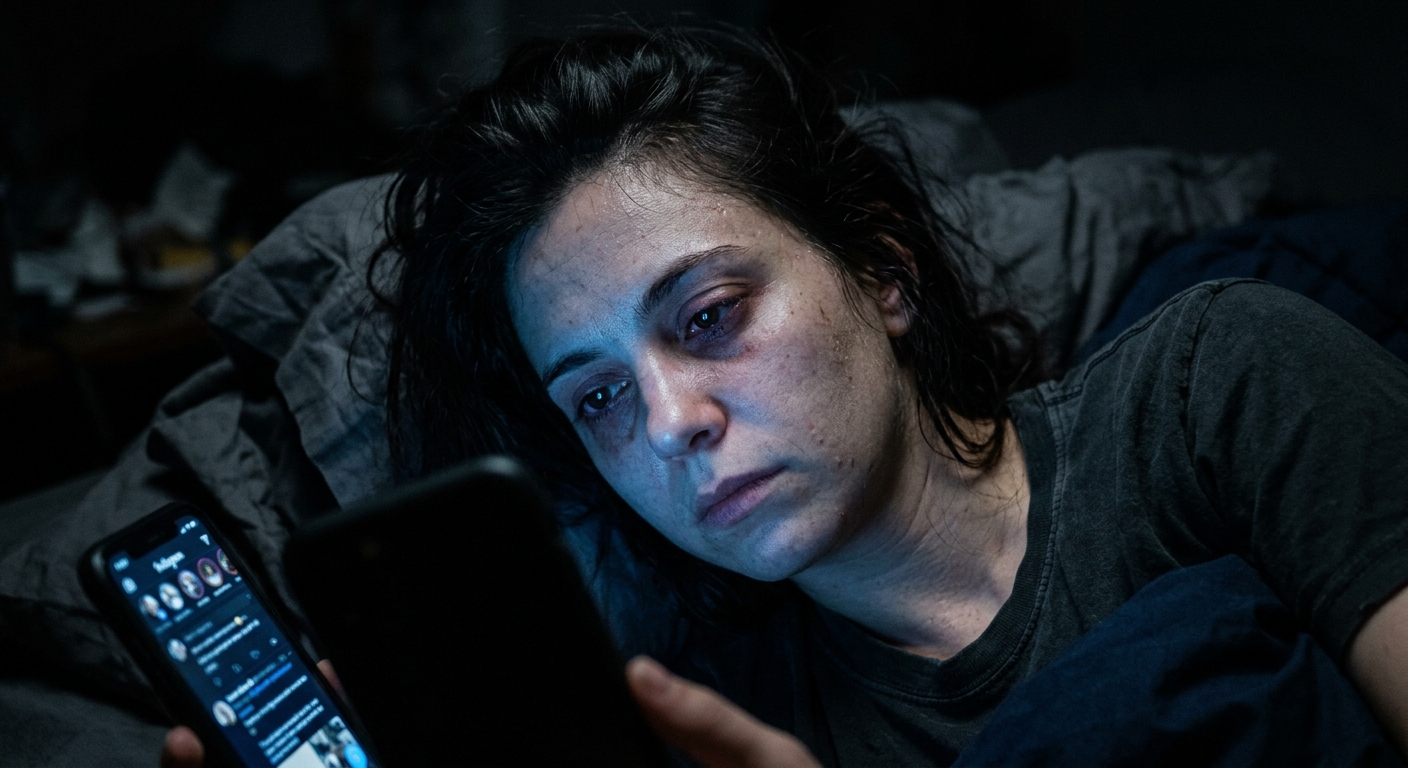
3. The Infinite Scroll Treadmill
Have you ever reached the bottom of TikTok or Instagram Reels? No. Because there is no bottom. The endless feed is a psychological slot machine. Every time you pull the lever (swipe up), you might get a dud (a boring ad) or you might hit the jackpot (a hilarious meme that gives you a hit of dopamine).
This intermittent reinforcement is the exact same tactic used in casinos. The algorithm exploits this biological loophole, turning millions of highly intelligent adults into lab rats hitting a button for a pellet. We mistake the rapid consumption of 15-second videos for actual progress or relaxation. In reality, we are just running on a hamster wheel designed to harvest our attention and sell it to advertisers.
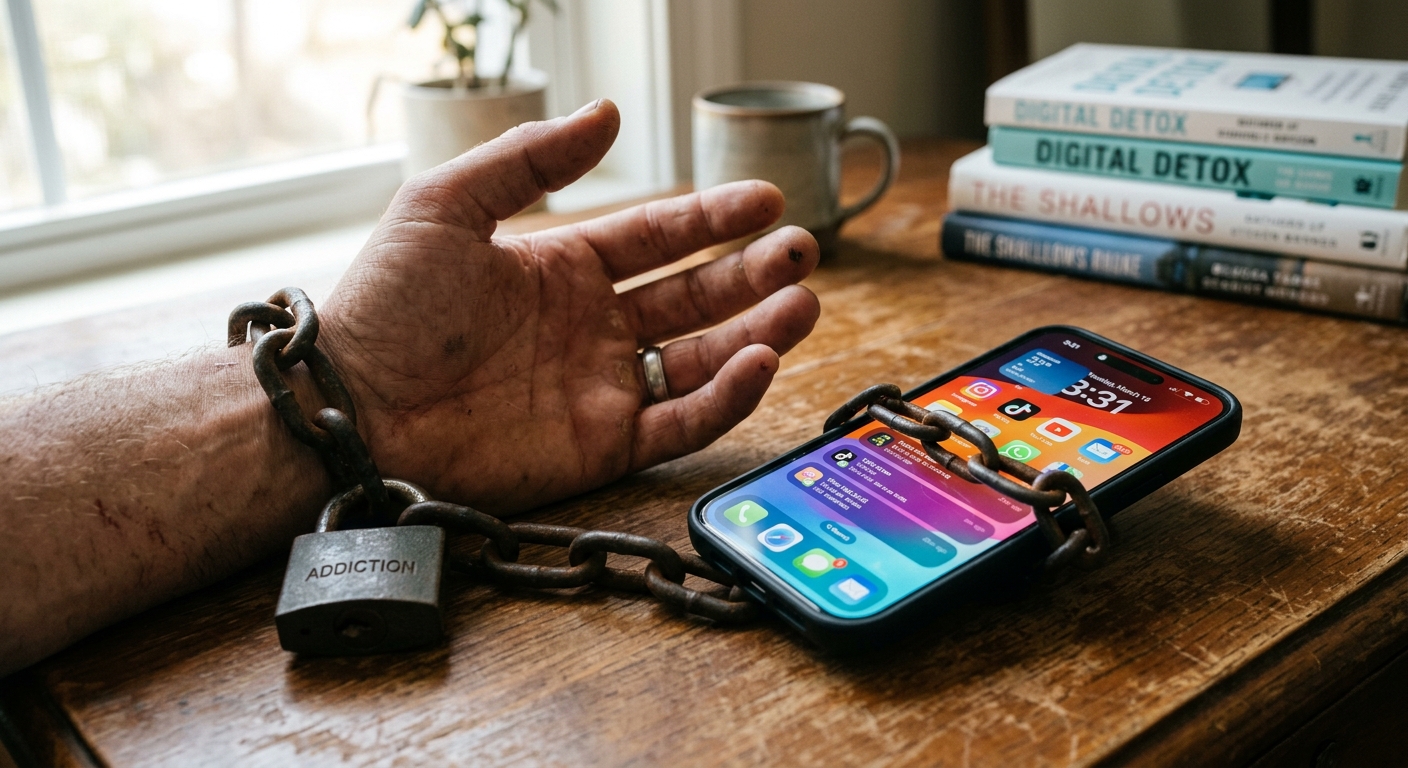
4. Breaking Out of the Digital Jail
So, how do we stage a prison break when the walls are invisible? The first step is recognizing that the game is rigged. You cannot outsmart a supercomputer designed by thousands of engineers whose sole purpose is to capture your attention.
But you can change the rules. Start by turning off non-essential notifications—don’t let the warden blow the whistle whenever it wants. Curate your feed aggressively; if an account makes you angry or anxious, unfollow it immediately. Finally, practice the radical act of leaving your phone in another room. The invisible prison only exists as long as you agree to hold the bars.
The algorithm will always be waiting for you to come back. The question is, are you ready to finally walk out the front door?