We live in a world where buying a house requires the GDP of a small nation, finding peace and quiet feels like an extreme sport, and reality is frankly, a bit of a scam. The physical realm is cracking under the pressure of inflation, burnout, and endless notifications. So, what is the modern human’s solution to an inherently broken real world? We do what any rational species would do: we strap a glowing brick to our faces, plug in, and escape to a beautifully rendered, entirely fake one. Welcome to the golden age of virtual reality-the ultimate societal retreat.
You can’t really blame us. If reality is offering traffic jams, rent hikes, and existential dread, while the metaverse is offering a beachfront property on Mars where you can fly, the choice is pretty obvious. The appeal of the digital frontier isn’t just about playing games anymore; it’s about finding the control and comfort we’ve entirely lost in the real world.
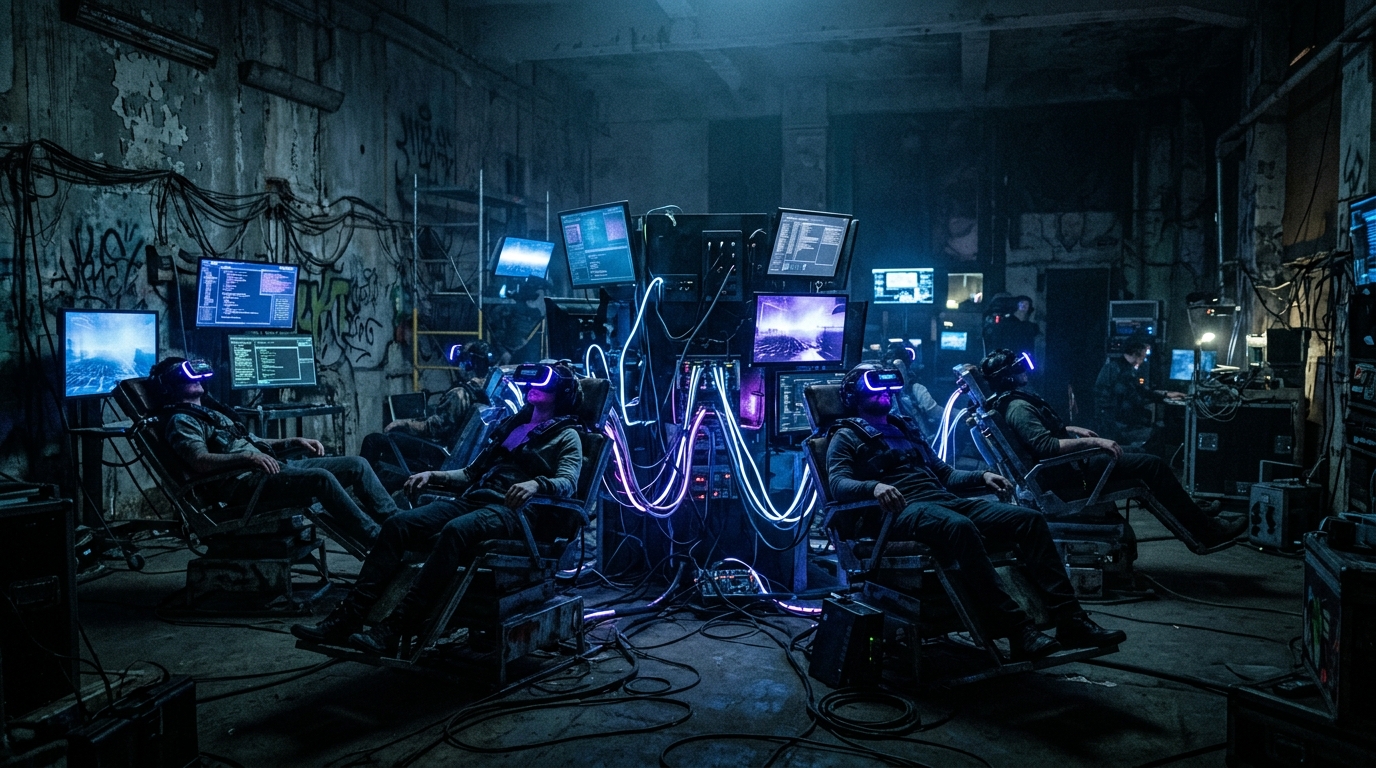
The Premium Subscription to Happiness
In the past, escapism meant reading a book, going to the movies, or maybe taking a very long nap. But those were temporary fixes. You always had to put the book down. The movie always ended. The nap always resulted in waking up to the same pile of unpaid bills. Virtual reality, however, promises something far more intoxicating: permanence. Or at least, the illusion of it.
We are trading our physical presence for digital sovereignty. Why bother cleaning your actual, terrifyingly small apartment when your virtual penthouse is immaculate and overlooks a neon-lit cyberpunk metropolis? In the metaverse, you are wealthy, you are stylish, and your back probably doesn’t hurt. It is a premium subscription to happiness, and business is booming.
But let’s be honest with ourselves. This isn’t just a technological marvel; it’s an indictment of our physical reality. The fact that we are willing to spend hours-sometimes days-ignoring our basic biological needs just to exist as a floating avatar speaks volumes about the state of things. We aren’t just adopting new tech; we are actively seceding from reality.
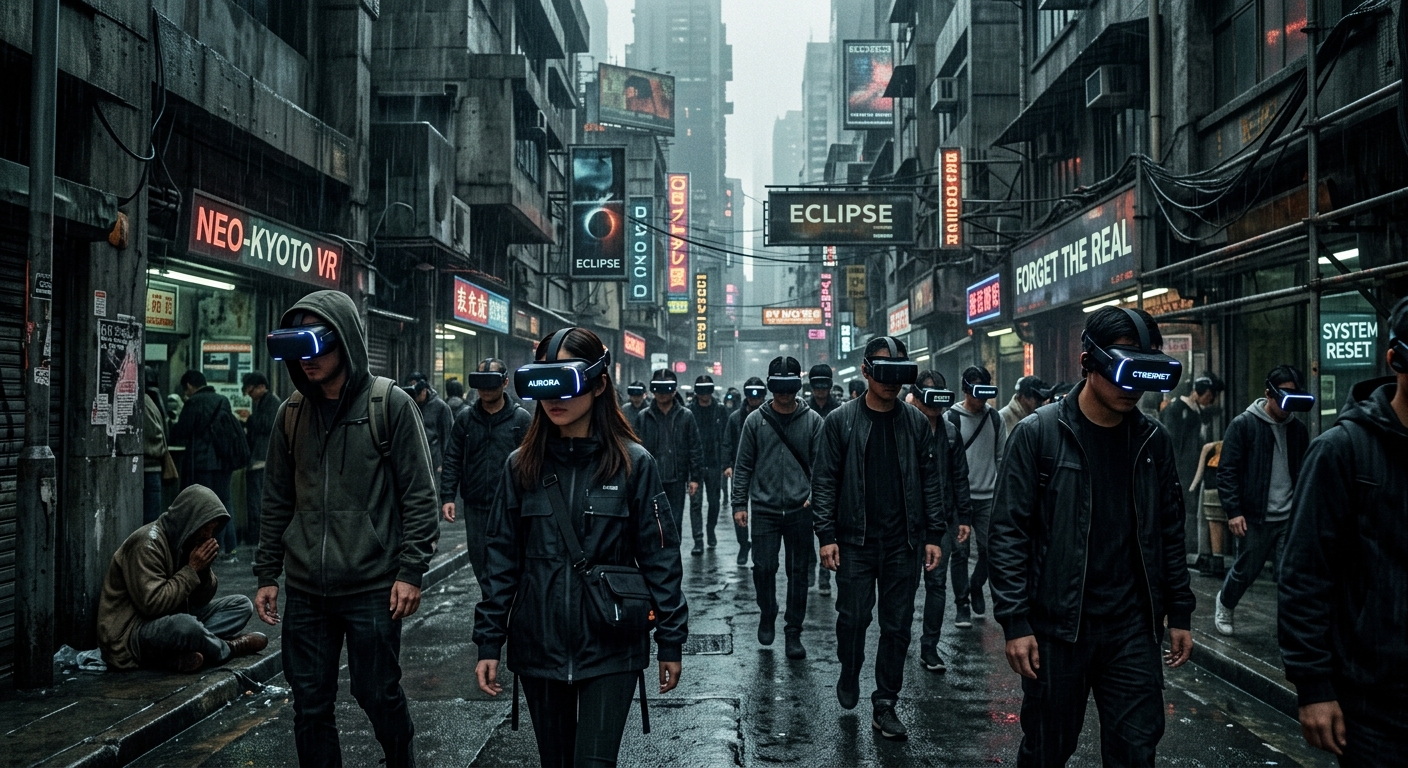
Digital Real Estate and Artificial Scarcity
Ironically, as we flee the physical world to escape its economic pressures, we are immediately recreating them in the digital one. Humans are nothing if not predictable. We couldn’t just build a utopia where everything is free and everyone is equal. No, we had to invent digital real estate, virtual luxury goods, and artificial scarcity. Because what’s the point of having a fake life if you can’t be richer than someone else’s fake life?
You see people spending thousands of actual, hard-earned dollars on digital sneakers their avatar can wear in a virtual lobby. We are buying pixels to prove our worth. If you want to dive deeper into this specific flavor of madness, check out our thoughts on how society is evolving at Society on Chains, where we track exactly how the physical and digital worlds are colliding.
It’s fascinating in a deeply dystopian way. We built an infinite, boundless sandbox, and the first thing we did was put up fences and charge rent. It proves that the problem was never just the physical limitations of our world; it’s the operating system running inside our own heads.
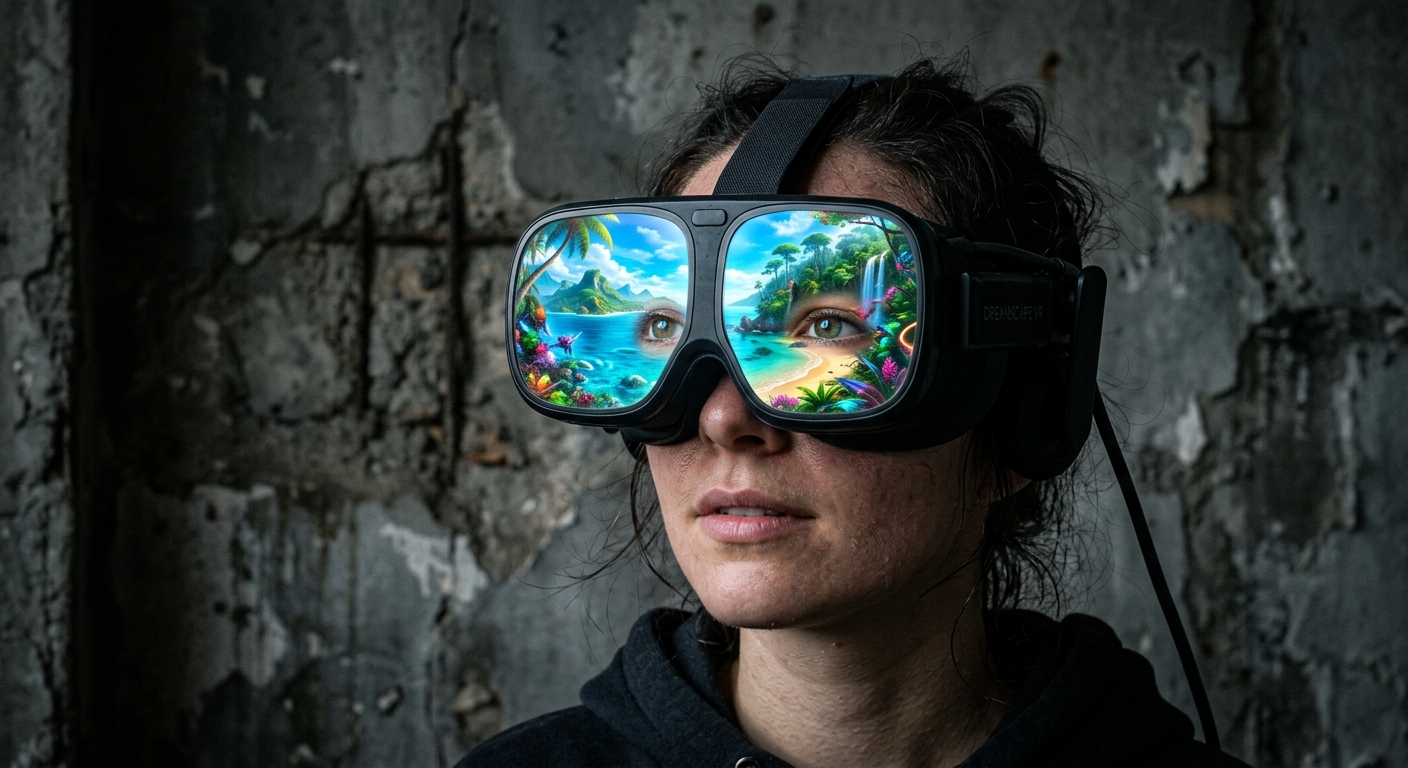
The Physical Toll of a Digital Life
While our minds are soaring through the cosmos or attending virtual boardroom meetings as a pixelated dog, our physical bodies are left behind, slumped in ergonomic gaming chairs, soaking in the blue light. There is a bizarre disconnect happening. We are becoming a species of brains in jars, except the jar is a headset and the brain is fueled entirely by energy drinks and dopamine hits.
What happens when the headset comes off? The contrast between the vibrant, hyper-stimulating virtual world and the dull, gray reality of the physical one becomes sharper every day. It’s the ultimate hangover. The colors of the real world seem muted. The physics are boring. The NPCs (otherwise known as your neighbors) are uncooperative. The desire to plug back in becomes overwhelming.
We are raising a generation that might genuinely prefer the simulation. And honestly, can we blame them? When the real world offers climate anxiety, economic instability, and endless doomscrolling, the simulation looks like a pretty sweet deal. It’s safe. It’s controlled. And if you don’t like it, you can just change servers.
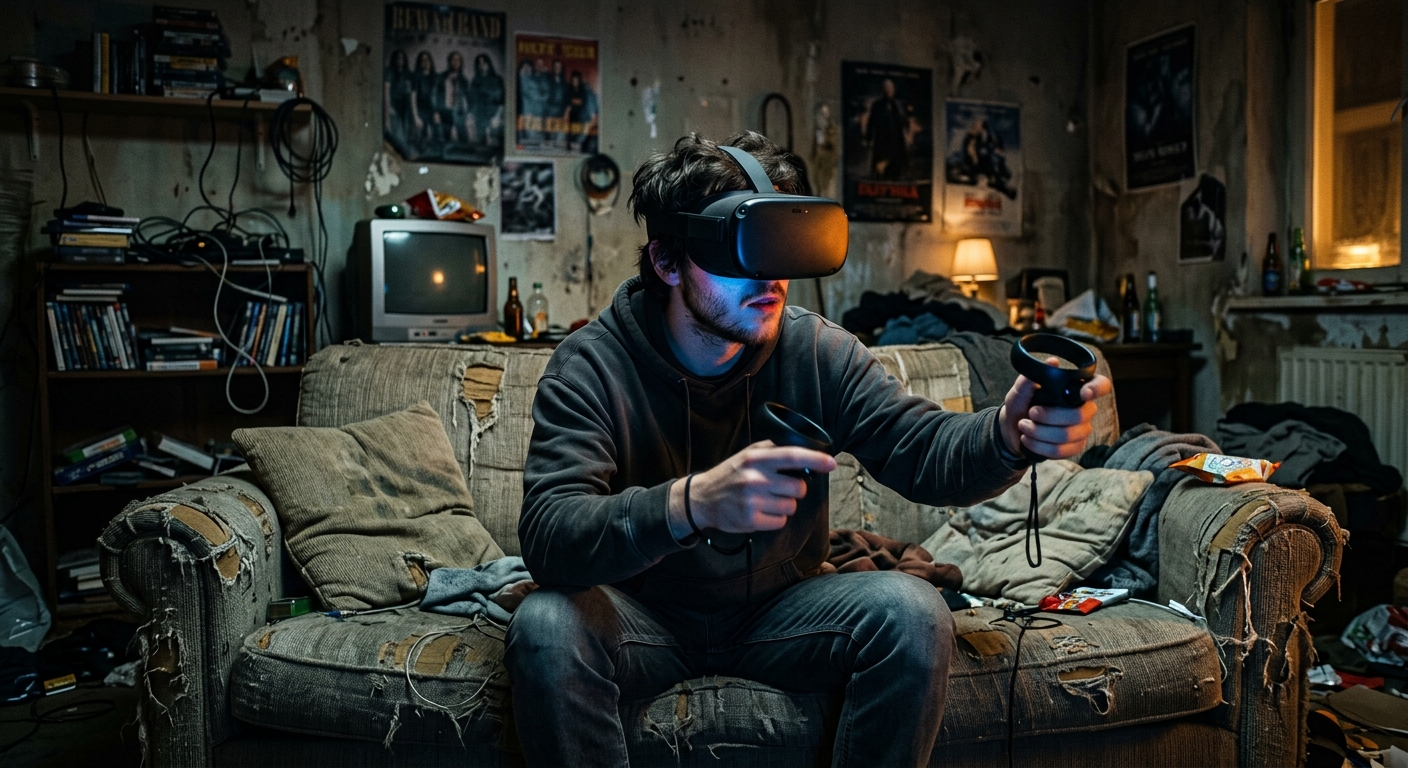
The Final Migration
So, where does this leave us? Are we destined to permanently migrate into the servers, leaving the physical Earth behind as a forgotten relic, a messy origin story we rarely visit? Perhaps. Virtual reality is no longer just a gaming peripheral. It is becoming the primary interface through which we experience society, economics, and human connection.
The matrix isn’t something that’s being forced upon us by malevolent machines. We are building it ourselves, voluntarily, and paying a monthly subscription fee for the privilege. We are running eagerly into the digital void because it’s simply easier than fixing the world we actually live in.
As the graphics get better and the headsets get lighter, the line between the physical and the virtual will blur until it disappears entirely. Until then, remember to occasionally take the headset off, stretch your legs, and look at a real tree. It might not be rendered in 8k resolution, but the physics engine is still pretty impressive.