Picture this: It’s 9:00 PM. You sit down on the couch after a long day of pretending to be thrilled about your company’s “new strategic direction,” pull out your phone, and open your favorite app. The goal? A quick five-minute mental break. When you finally look up, your coffee is cold, your dog is judging you, and it’s suddenly Thursday. Welcome to the terrifying reality of infinite scrolling.
We are living through the greatest psychological heist in human history. The product being stolen? Your attention span. And the getaway vehicle is a glowing rectangle specifically designed to simulate the sensation of moving forward while keeping you glued to the exact same spot. Let’s unpack the illusion of motion in the digital age and why your brain thinks watching 400 consecutive TikToks is an accomplishment.

1. The Slot Machine in Your Pocket
If you walked into a casino, sat down at a slot machine, and pulled the lever for six hours straight, your family would probably stage an intervention. But when you do the exact same thing on your couch while wearing sweatpants, we call it “unwinding.”
Silicon Valley engineers didn’t design the infinite scroll by accident. They modeled it directly on casino behavioral psychology—specifically, intermittent variable rewards. When you swipe your thumb up the glass, your brain doesn’t know what’s coming next. It could be a boring ad for car insurance, or it could be a highly entertaining video of someone falling off a ladder. Because the reward is unpredictable, your brain dumps dopamine in anticipation of every single swipe. This chemical hijacking is the cornerstone of social media addiction. You aren’t scrolling because you want to; you’re scrolling because your biology is being hacked.
(We explored how this architecture isolates us in our deep dive on The Algorithm as the New Warden. Spoiler alert: The warden is winning.)

2. The Illusion of Productivity
Here is the sneakiest part of the modern digital landscape: consuming content feels incredibly similar to doing something. When you watch a 10-minute video essay on the Roman Empire or read a long thread about how to optimize your morning routine, your brain registers it as an accomplishment. You feel informed. You feel productive.
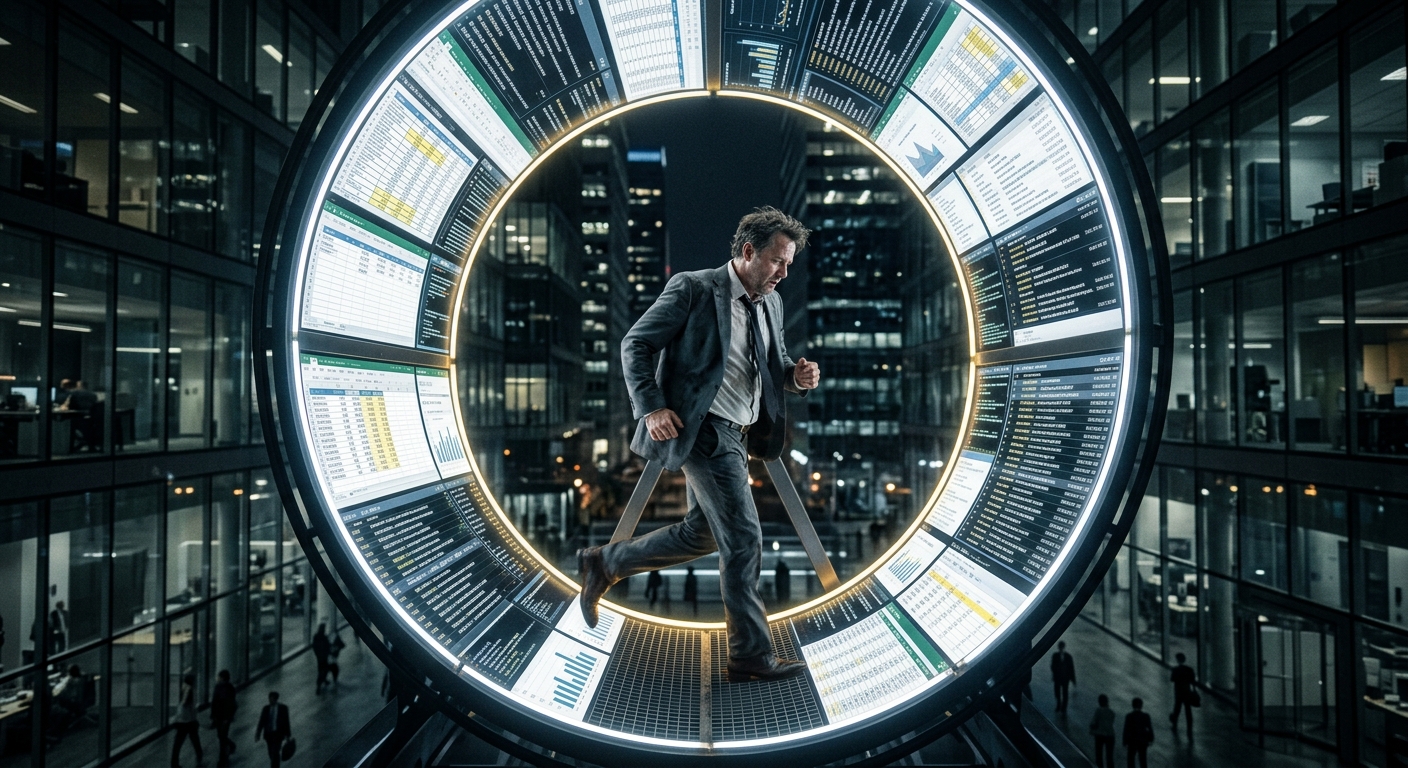
But consuming information is not the same as taking action. You have gained zero practical progress. You are running on a digital treadmill, sweating over hot takes and viral trends, but when you step off, you haven’t actually moved an inch. This illusion of motion is why we feel exhausted at the end of a day where all we did was consume content. We are confusing the rapid processing of information with actual forward momentum in our lives.

3. The Death of Boredom
*Cue dramatic gasp.* Let’s talk about the most terrifying word in the English language: Boredom. When was the last time you were genuinely bored? Not “waiting in line at the grocery store for two minutes” bored, but deeply, existentially bored with nothing to look at?
The infinite scroll has eradicated boredom from the human experience. Why is that bad? Because boredom is the birthplace of creativity. When your brain is starved of external stimuli, it is forced to generate its own. It wanders. It imagines. It solves problems. By immediately reaching for our phones the second we feel a hint of under-stimulation, we are suffocating our own creativity. We have traded the ability to think deeply for the convenience of being constantly entertained.
(If you are feeling burnt out by the constant need to be doing something, check out our recent article on The Productivity Trap.)
4. Stepping Off the Treadmill
How do we break the illusion of motion and start actually moving forward? First, you have to ruin the magic trick. Go into your phone’s settings and turn the screen to grayscale (black and white). Without the bright, candy-colored notifications and vibrant videos, the slot machine instantly loses its appeal. Suddenly, it’s just a boring rectangle of text.
Next, embrace the friction. Delete the apps that utilize the infinite scroll from your home screen. Make it annoyingly difficult to access them. Force yourself to type the URL into a browser if you really want to check your feed.
Finally, practice being bored again. Leave your phone in the car when you go into the grocery store. Stare out the window. Let your mind wander. You might be surprised by what you find when the screen goes dark.
1 thought on “Infinite Scrolling, Zero Progress: The Illusion of Motion in the Digital Age”