You’re sitting on the couch. Your thumb flicks upward. A video of a golden retriever. Flick. A hot take on macroeconomic policy by a teenager. Flick. A satisfying loop of a pressure washer cleaning a driveway. Flick. Suddenly, it’s forty-five minutes later. The sun has gone down, your leg has fallen asleep, and you have achieved absolutely nothing of substance. Welcome to the infinite scroll: the digital treadmill where motion feels like progress, but you’re actually just running in place.
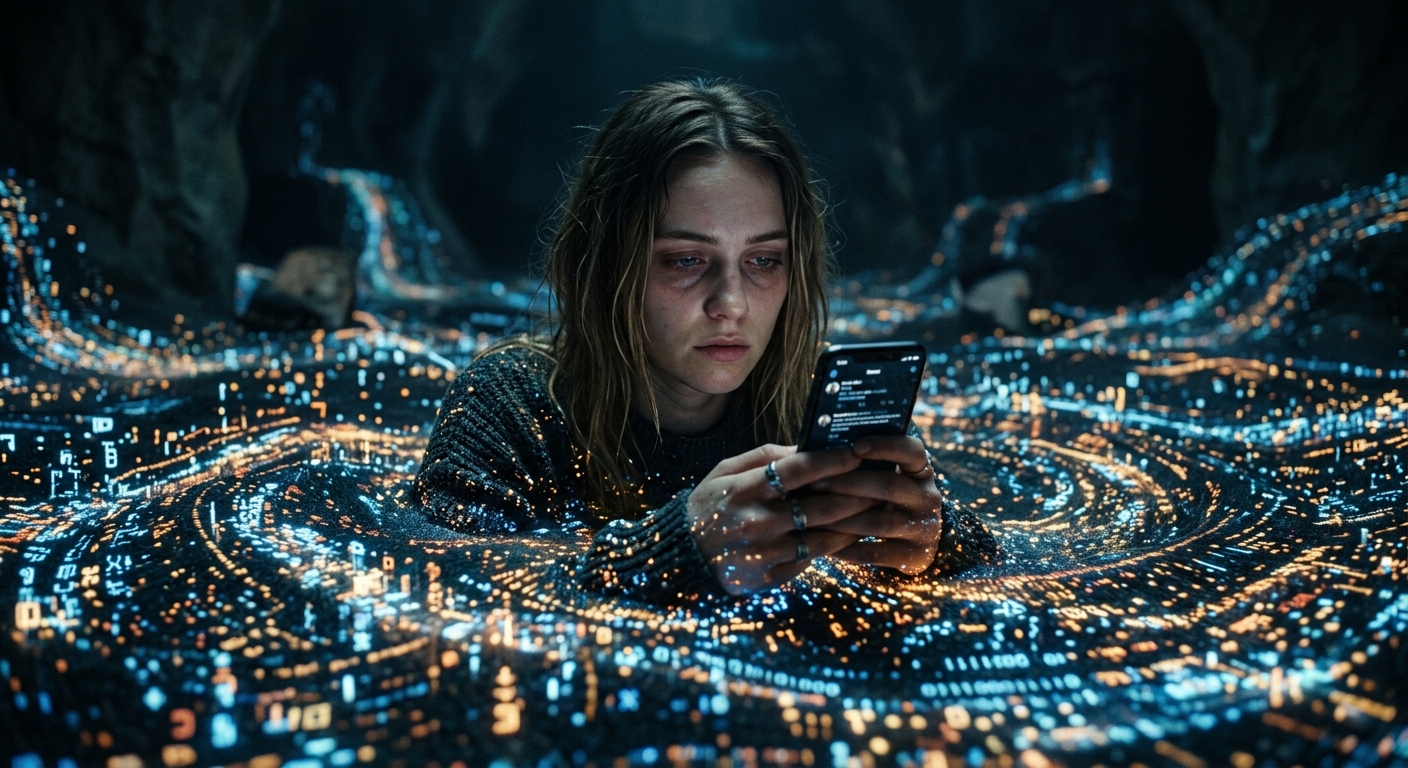
The Architecture of the Abyss
The infinite scroll wasn’t an accident; it was a carefully calculated piece of user interface design. Before its invention, consuming digital content had natural stopping cues. You read a blog post, you hit the bottom of the page, and you had to make a conscious decision to click “Next Page.” That tiny micro-moment of friction—the decision to keep going or to stop—was a lifeline to reality.
Then, in 2006, Aza Raskin invented the infinite scroll. The goal was to make browsing seamless, to remove the friction of clicking. It was a stroke of UI genius that turned out to be a psychological catastrophe. By removing the stopping cue, social media platforms effectively hacked the human brain’s foraging instinct. We are biologically wired to keep looking for the next piece of novel information, the next berry on the bush. When the bush has no bottom, we just keep picking.
We mistake the act of scrolling for the act of doing. We feel like we are consuming information, staying informed, and participating in the culture. But are we? Most of the content is forgotten the literal second it leaves the screen. It is junk food for the mind—high in dopamine, completely devoid of nutritional value.
The Illusion of Momentum
The danger of the infinite scroll isn’t just that it wastes time; it’s that it pacifies us. Motion creates the illusion of momentum. As long as the feed is moving, we feel like we are engaged in an activity. It perfectly mimics the sensation of productivity while requiring zero actual effort.
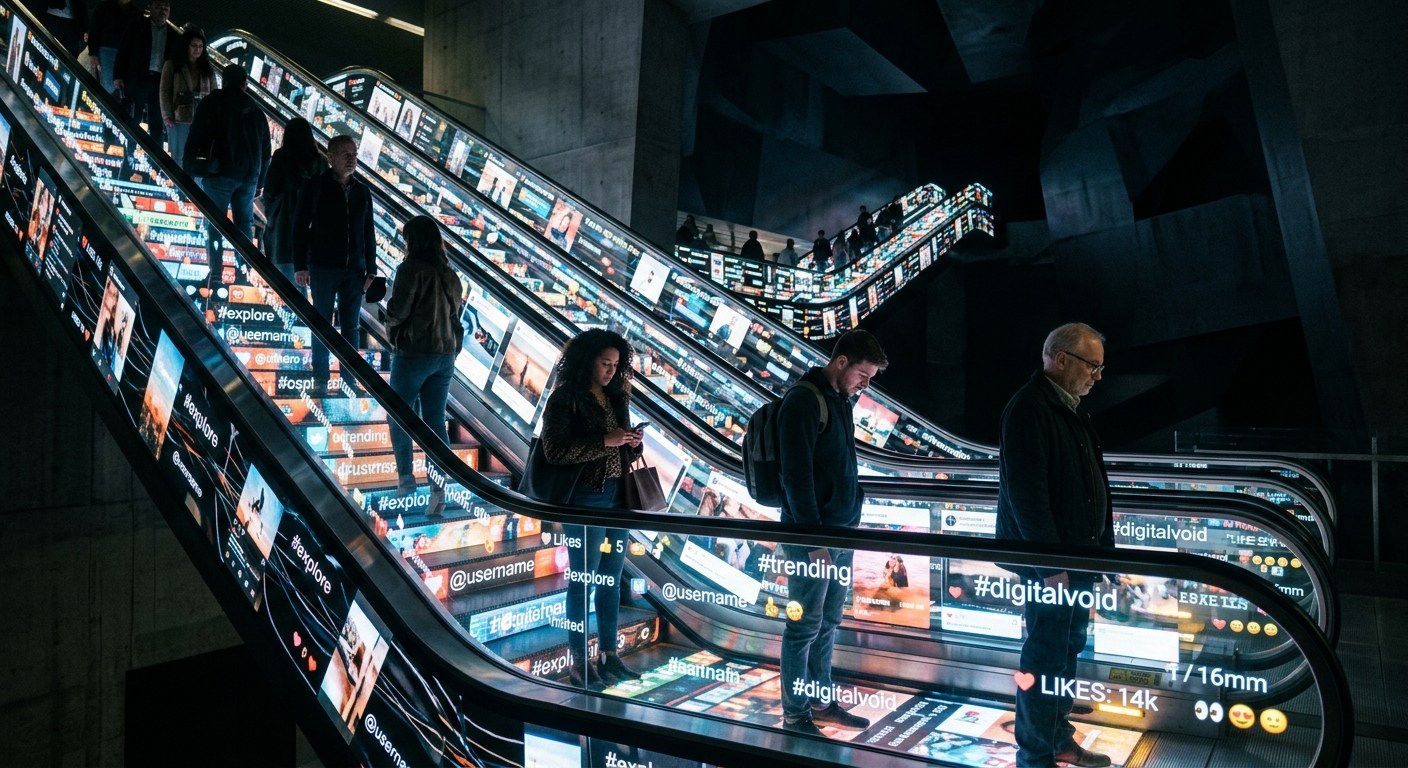
Think about the state your brain enters during a deep scroll. It’s not active focus. It’s a trance. Your jaw goes slack. Your blinking slows down. You are entering a mild hypnotic state designed to keep your eyeballs glued to the screen just long enough to serve you another targeted advertisement. You aren’t consuming the feed; the feed is consuming you.
We are told that we have the sum total of human knowledge at our fingertips, but instead of learning a new language or reading philosophy, we spend three hours a day watching strangers do choreographed dances and arguing with bots about politics. The medium is the message, and the message of the infinite scroll is: “Nothing matters, just keep swiping.”
The Quicksand of Digital Comfort
Why is it so hard to stop? Because stopping forces us to face the silence. When the glowing rectangle goes dark, we are left alone with our own thoughts, our anxieties, and the quiet realization of our own mortality. The infinite scroll is an anesthetic.
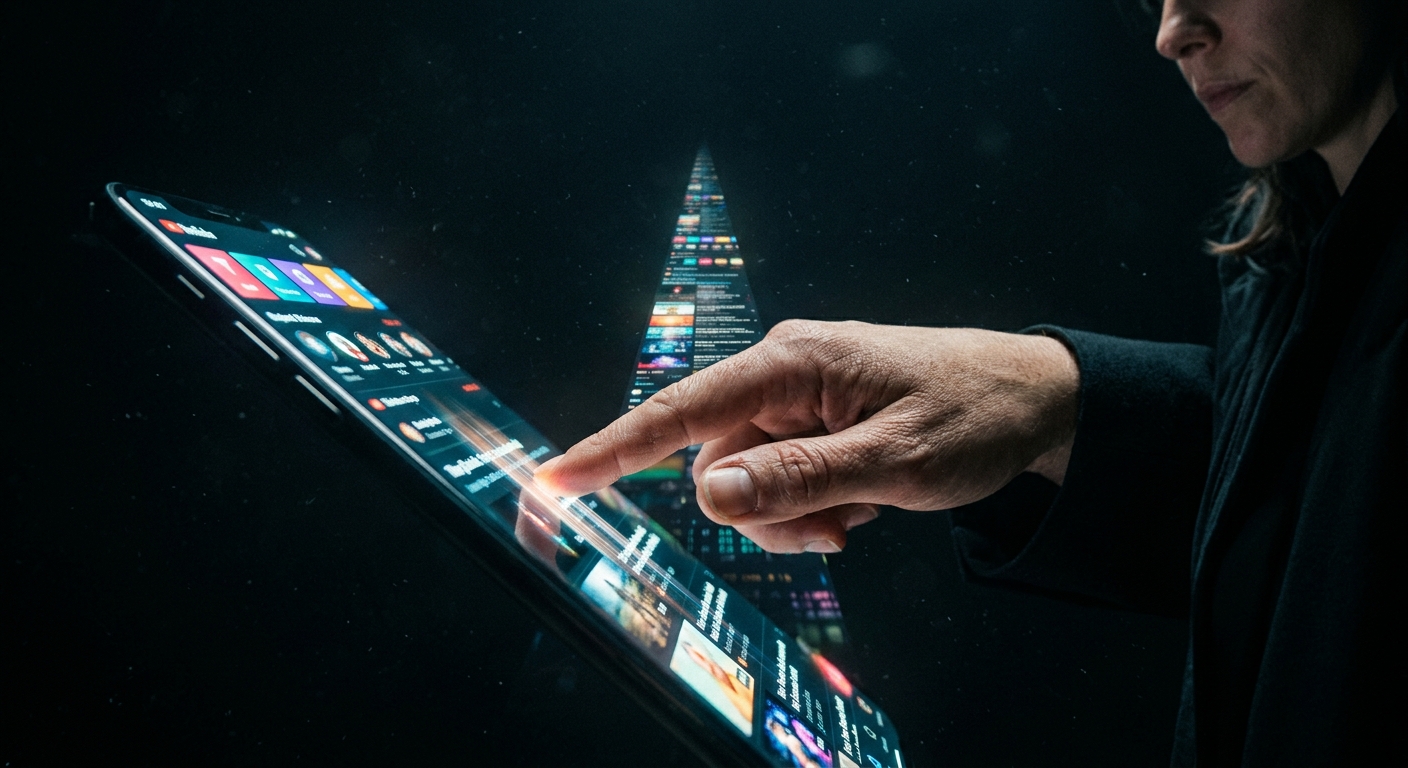
It’s comfortable quicksand. It feels good to just sink into the couch and let the algorithm wash over you. But every minute spent in the scroll is a minute you aren’t building a skill, connecting with a human being in the physical world, or creating something of your own. The tech giants are strip-mining your attention span, turning your precious time into data points to sell to the highest bidder.
The creator of the infinite scroll himself has expressed deep regret over his invention, comparing it to “behavioral cocaine.” When the architect of the prison tells you the bars are toxic, it might be time to start looking for the exit.
Finding the Bottom
How do we fight back against an enemy that lives in our pockets? It requires intentional friction. If the problem is the removal of stopping cues, the solution is to put them back.
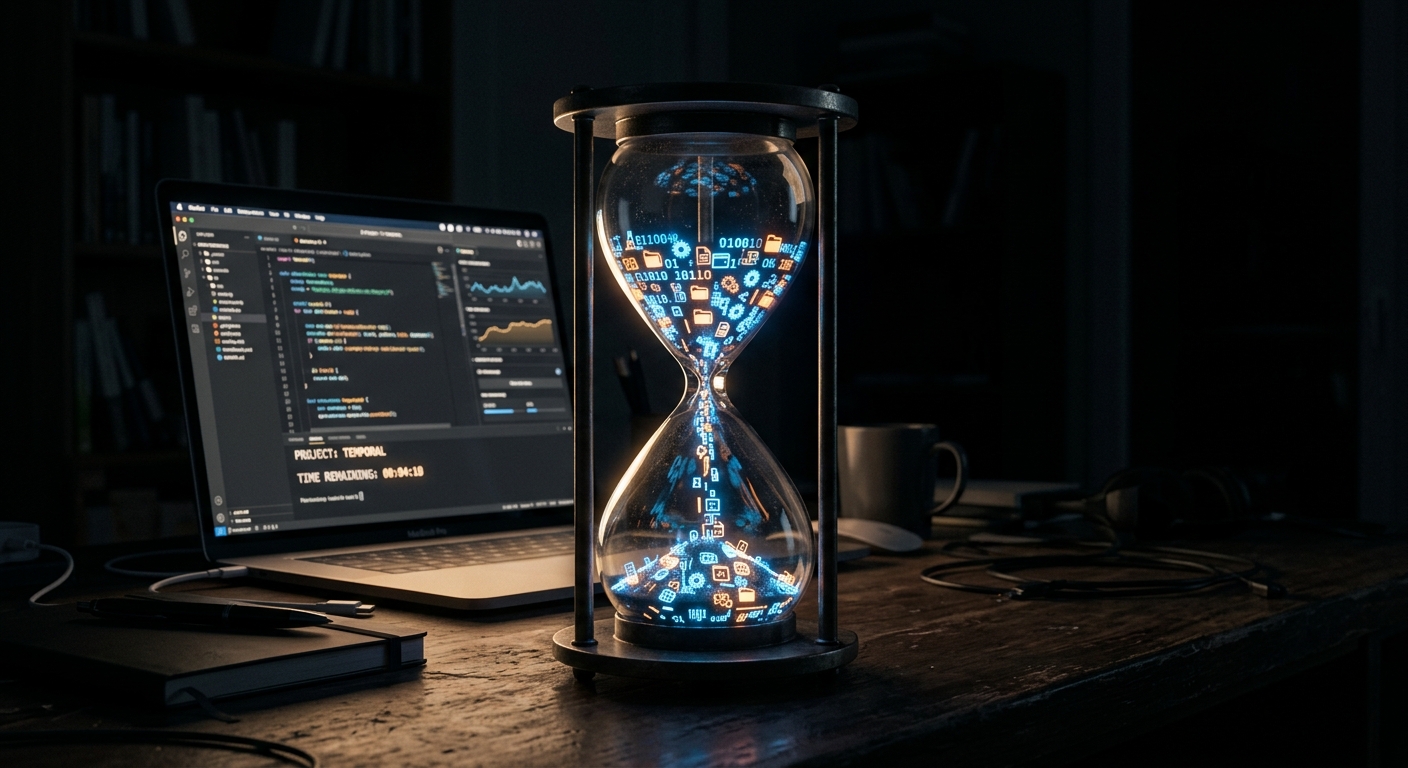
Set a physical timer when you open a social media app. When it goes off, close the app. Turn your phone screen to grayscale; it’s amazing how much less appealing the infinite scroll is when the little red notification badges aren’t screaming at your dopamine receptors. Curate your feeds ruthlessly. If an app doesn’t serve you, delete it off your home screen so you have to actively search for it to open it.
To understand more about the mechanisms designed to keep us hooked and how to break free, check out our insights on Society on Chains. We explore how modern technology has built invisible cages around our attention, and what we can do to dismantle them.
The Verdict
The infinite scroll is the ultimate illusion of motion. It promises a destination but delivers an endless hallway. Your time on this planet is not infinite, but the feed is. Don’t trade your finite life for their infinite loop. Put down the phone, look up, and start moving forward in the real world.