You’re in the middle of a deep conversation with a friend. Or maybe you’re finally focused on writing that report you’ve put off all week. Suddenly, your phone vibrates. A tiny, bright red dot appears in your peripheral vision. A soft ping cuts through the silence. Immediately, your heart rate elevates. Your train of thought derails. Without conscious thought, your hand reaches out to grab the device. Congratulations, you’ve just responded to the digital equivalent of a dog whistle.

The Pavlovian Pockets
In the late 19th century, Ivan Pavlov famously discovered classical conditioning by ringing a bell every time he fed a dog. Eventually, the dog would salivate just at the sound of the bell, even if no food was present. A hundred years later, thousands of the smartest engineers and psychologists on the planet descended on Silicon Valley to run the exact same experiment on billions of human beings.
The notification system wasn’t designed to be helpful. It was designed to be interruptive. Tech companies understand that human attention is a zero-sum game. If you are looking at the physical world, you are not generating ad revenue for them. They needed a mechanism to constantly yank you out of reality and pull you back into the digital ecosystem. Enter the push notification.
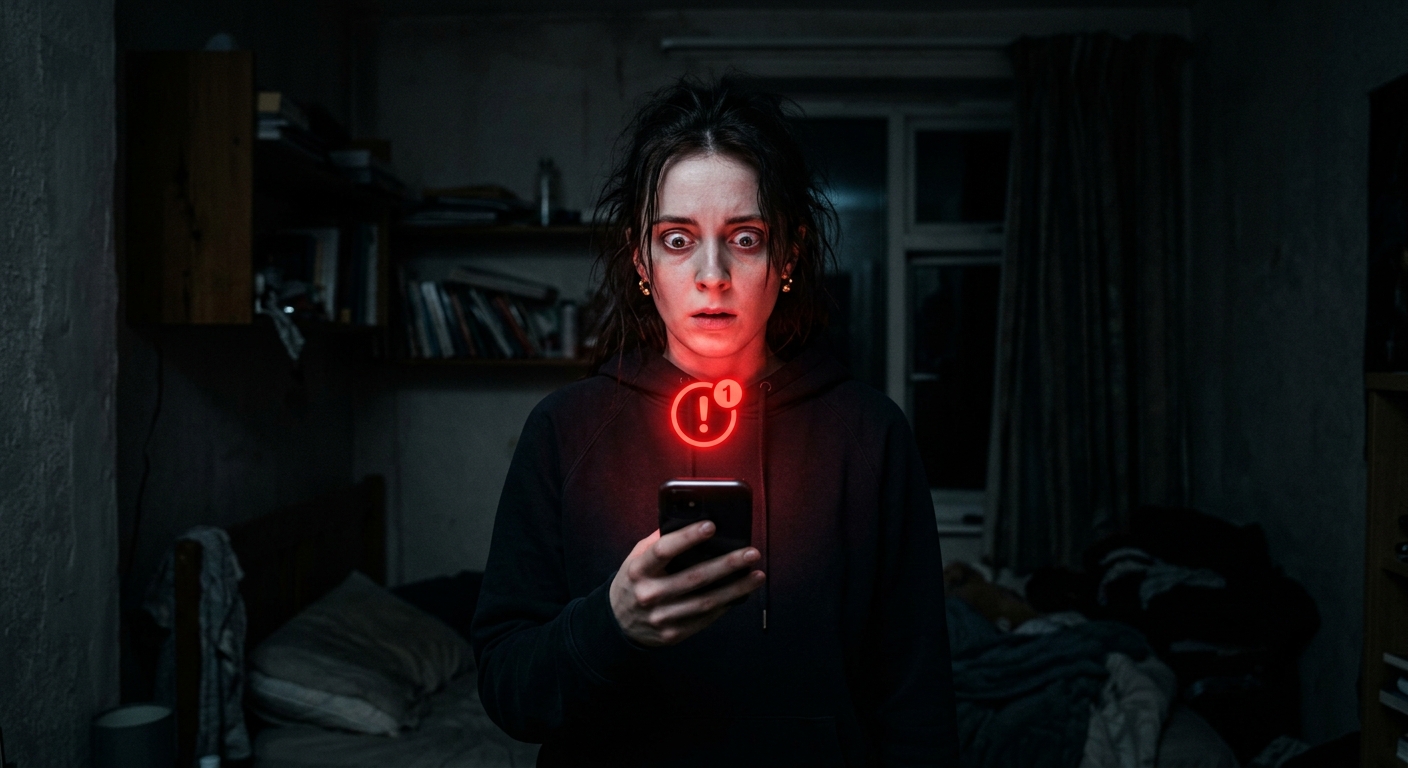
The sounds, the haptic buzzes, and the aggressive red color of the badges were explicitly chosen to trigger a primal neurological response. Red is the color of emergency, of blood, of danger. Our brains are hardwired to pay attention to it. When you see a red bubble with a number inside it, your brain registers it as an unresolved task, a social obligation, or a potential threat. You cannot relax until you clear the notification.
The Slot Machine in Your Hand
But why is it so addictive? Because it operates on the principle of variable reward—the exact same psychological hook that makes slot machines so devastating.
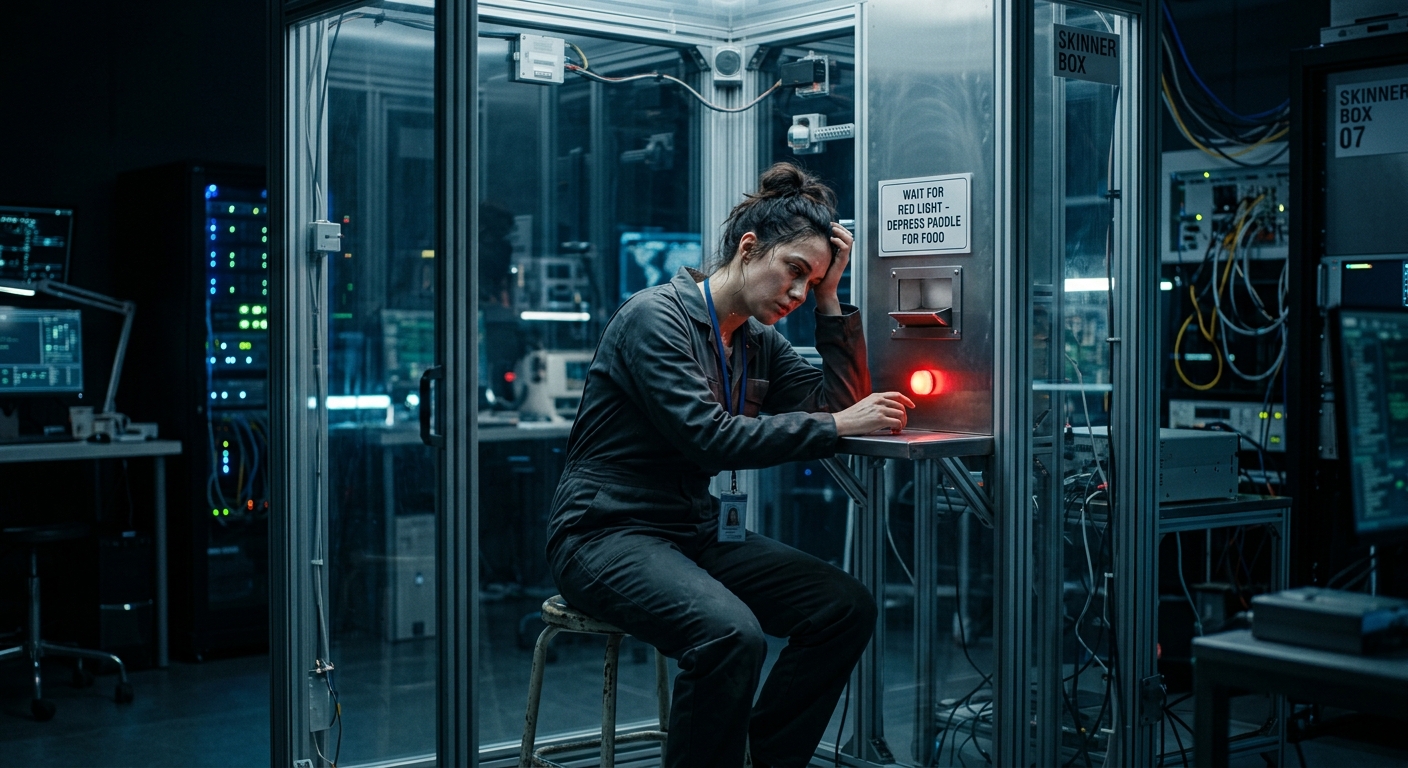
When your phone buzzes, you never know what it is. It could be an email from your boss firing you. It could be a text from a crush telling you they love you. Or, most likely, it is a notification from a food delivery app offering you 10% off a burrito. That uncertainty is the key. The human brain releases more dopamine in anticipation of a reward than upon receiving the reward itself. The buzz is the lever pull. Looking at the screen is the jackpot reveal.
We have outsourced the initiation of our actions to a machine. Instead of deciding when to check our messages based on our own schedule, we wait for the machine to grant us permission to look. We are literally training ourselves to be obedient to software.
The Fragmentation of Thought
The cost of this constant interruption is catastrophic to human cognition. Studies show that after a notification breaks your focus, it takes an average of 23 minutes to return to a state of deep concentration. If you receive just three notifications an hour, you have effectively eliminated your ability to engage in deep work for the entire day.
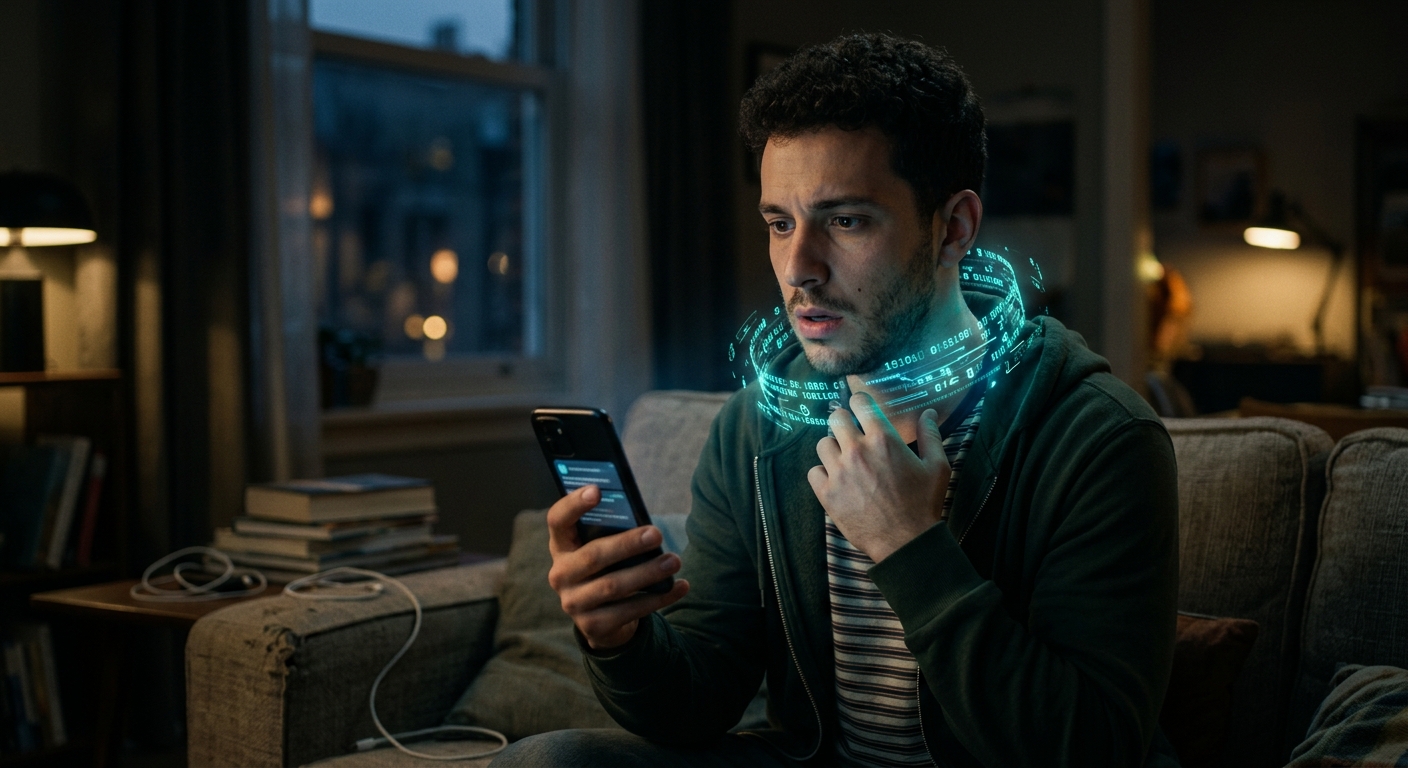
We are creating a society of shallow thinkers. Complex problem-solving requires sustained focus, a quiet mind, and the ability to hold multiple competing ideas in your head simultaneously. You cannot do that when a pocket-sized supercomputer is screaming for your attention every five minutes. The dog whistle forces us to live in a perpetual state of reactive anxiety.
We mistake the anxiety of unresolved notifications for productivity. “Look how busy I am! Look at all these emails!” But busy is not the same as effective. You can spend an entire day clearing red bubbles and achieve absolutely nothing of value.
Taking Back the Leash
The good news is that unlike Pavlov’s dogs, you have the ability to uninstall the bell. But it requires realizing that the default settings on your phone are hostile to your mental health.
Turn off push notifications for every app that isn’t a direct message from a human being you care about. News apps, social media, shopping apps, games—none of these require your immediate attention. They can wait until you decide to open them. Leave your phone in another room when you need to focus. Reclaim your ability to be bored, to sit in silence, and to control where your attention goes.
To dive deeper into the behavioral engineering designed to keep us hooked, check out our exploration on Society on Chains regarding the dopamine economy and the cheap chains of instant gratification.
The Final Word
You are not a dog. You do not need to salivate every time Silicon Valley rings a bell. The notification is an illusion of urgency designed to strip-mine your time. Stop letting the algorithm dictate the rhythm of your day. Silence the whistle, and you might just hear yourself think again.