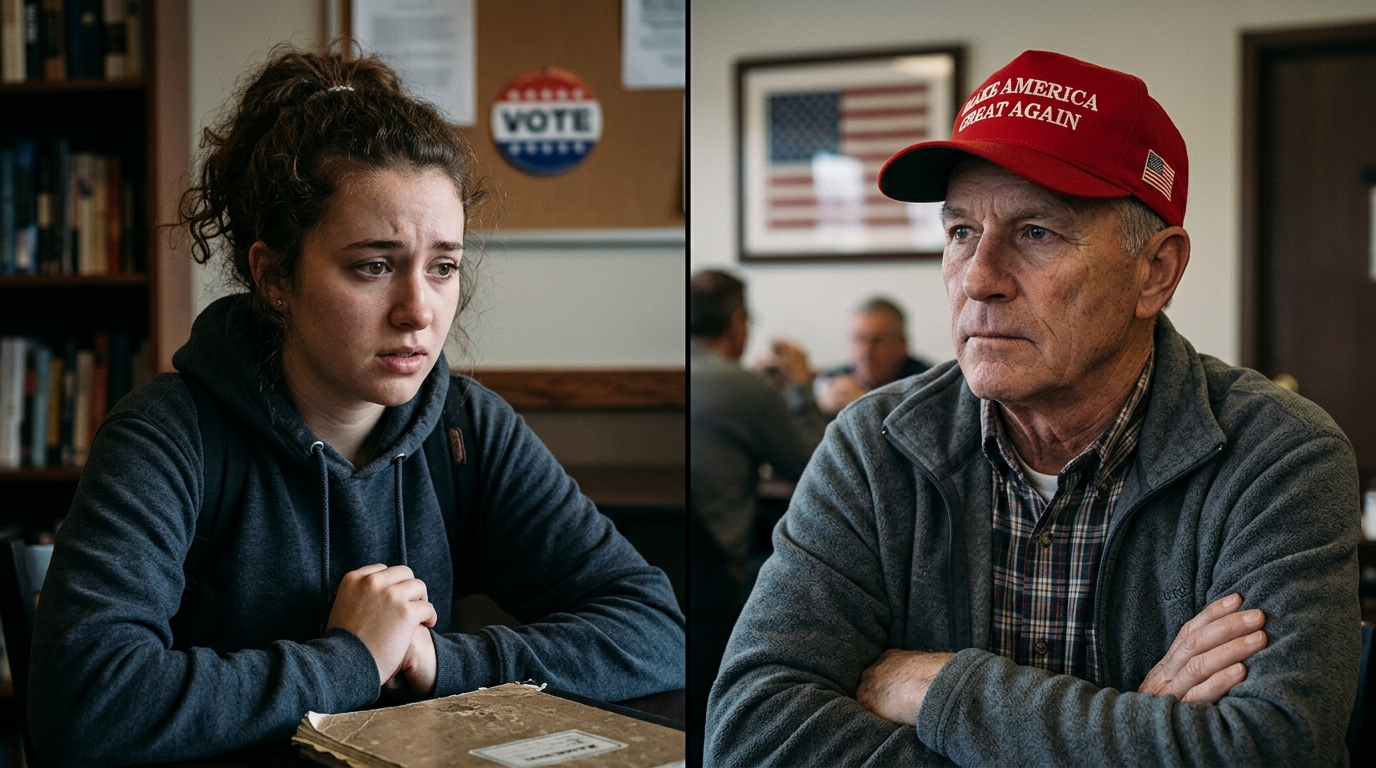
The traditional bedrock of the American conservative movement is experiencing an unprecedented seismic shift. As the US-Israeli military campaign in Iran approaches the end of its fourth week, the annual Conservative Political Action Conference (CPAC) in Dallas, Texas, has become ground zero for a glaring generational divide.
While the Republican establishment and older loyalists remain fiercely committed to the administration’s military objectives, younger conservatives are beginning to ask a very uncomfortable question: What exactly is the endgame, and at what cost to the American working class?
For a political coalition that swept back into power on promises of “America First” realism and the avoidance of foreign entanglements, this ideological fracture could have profound implications. The pressure is mounting for an exit ramp, and the clock is ticking toward the upcoming midterm elections.
The Generational Fracture at CPAC
For over a decade, CPAC has been the ultimate welcoming ground for the modern conservative movement. This year, relocated to a sprawling complex near Dallas, the atmosphere was a familiar mix of patriotic fervor and political merchandise. However, beneath the surface of the “bulletproof” commemorative glasses and 2028 campaign shirts, a fierce debate is brewing over the ongoing conflict.
Interviews with dozens of conference attendees reveal a stark contrast in worldview based almost entirely on age. Older attendees view the intervention as a necessary, non-negotiable step to neutralize an existential nuclear threat. Younger attendees, however, view it as a betrayal of the isolationist, America-first foreign policy they voted for.
The Perspective of the Old Guard
For veteran attendees and the older demographic often dubbed the “Trump Tribe,” the calculus is simple: trust the leadership and finish the job.
- Existential Security: Many older conservatives cite the prevention of a nuclear-armed Iran as an absolute necessity that supersedes domestic economic concerns.
- Unwavering Loyalty: There is a profound, ingrained trust that the administration knows what it is doing and will protect American allies in the region.
- The Ghost of 1979: The older generation vividly remembers the Iranian revolution and subsequent decades of geopolitical tension, framing the current conflict as a long-overdue reckoning.
The Skepticism of the Youth
In sharp contrast, the younger generation—college students and first-time voters who were instrumental in the 2024 election—are expressing deep reservations. For them, the conflict is not a noble crusade, but a dangerous distraction.
Economic Anxiety Over Foreign Intervention:
Younger voters are overwhelmingly focused on the domestic economy. They point to the rising cost of living, soaring gas prices, and inflation. The prospect of spending billions—with the Pentagon reportedly considering a $200 billion request for war funding—while Americans struggle to afford basic groceries is a bitter pill to swallow.
The “America First” Promise:
A core tenant of the modern conservative youth movement was the rejection of the neoconservative, interventionist foreign policy of the early 2000s. They supported a platform that promised to avoid foreign wars and focus on nation-building at home. The current military deployment feels, to many, like a return to the very policies they sought to eradicate.
The Rising Cost of Conflict: A Political Liability?
The domestic political ramifications of a prolonged conflict are impossible to ignore. While polling suggests that a broad majority of Republicans still approve of the administration’s handling of the war, a deeper dive into the numbers reveals a precarious foundation.
According to recent Pew Research data, while older Republicans remain steadfast, support drops precipitously among the 18 to 29 demographic. Furthermore, the intensity of that support is waning. A tepid approval rating can easily translate into lower voter enthusiasm and depressed turnout—a fatal combination in tight congressional midterm races.
The Economic Warning Signs
The most immediate and tangible impact of the conflict on the average American is economic. The destabilization of the Middle East has inevitable consequences for global energy markets.
- Surging Gas Prices: The closure of critical shipping lanes and the threat to oil infrastructure have caused prices at the pump to spike.
- Inflationary Pressures: Higher energy costs ripple through the entire economy, increasing the cost of manufacturing and transporting goods.
- Budget Deficits: The astronomical cost of military deployments and operations threatens to balloon the national deficit, contradicting conservative principles of fiscal responsibility.
Political strategists warn that if the conflict is not resolved swiftly, the economic fallout could become the defining issue of the upcoming elections, overshadowing any perceived foreign policy victories.
Voices of Dissent on the Main Stage
The unease is not confined to the attendees; it has spilled onto the main stage at CPAC. Prominent conservative voices are beginning to publicly question the wisdom of the operation and the potential for a catastrophic escalation.
Former lawmakers and military contractors have used their platform to deliver stark warnings. They argue that a ground invasion would make the United States “poorer and less safe,” predicting that the conflict could create more terrorists than it eliminates. The stark reality of Iranian resilience—a nation that has not been conquered in millennia—was highlighted as a sobering counterpoint to the administration’s optimism for a rapid conclusion.
The Call for Transparency and Debate
There is a growing chorus demanding greater transparency regarding the administration’s endgame. What does victory look like? Is the goal regime change, and if so, who will fill the subsequent power vacuum?
Prominent conservative commentators have stressed that a debate must happen, particularly on the eve of potentially inserting American combat troops into a hostile theater. The blank check of political latitude granted by the base is not infinite.
The Path Forward: Finding an Exit Ramp
The administration finds itself walking a geopolitical tightrope. On one side is the undeniable pressure to project strength, protect allies like Israel and the Gulf states, and neutralize a perceived nuclear threat. On the other side is a growing domestic backlash, fueled by economic anxiety and an increasingly war-weary younger demographic.
The search for an “exit ramp” is now the most critical objective. The administration has hinted that the operation is “winding down,” attempting to reassure the base that a return to domestic priorities and lower gas prices is imminent.
However, wars rarely adhere to political timetables. The unpredictable nature of the conflict, combined with the complex web of regional actors, means that a clean extraction is far from guaranteed.
As the conservative movement grapples with this internal division, the outcome of the Iran conflict will likely determine not only the geopolitical landscape of the Middle East but also the political future of the Republican party. The youth vote, once a reliable asset, is now watching closely, waiting to see if the promises of “America First” will be honored, or sacrificed on the altar of foreign intervention.