You wake up. Your smart alarm (which requires a $4.99/month premium tier to play nature sounds) goes off. You walk into the kitchen, grab a pod of coffee (delivered via a monthly subscription box), and turn on the television (Netflix, Hulu, Disney+, Max—pick your poison, they all bill on the 15th). You walk out to your car, ready for your commute, and your fingers are cold. You reach to turn on the heated steering wheel. A message pops up on the dashboard: Feature disabled. Please renew your $15/month cold-weather package.
Welcome to the subscription lifestyle. You don’t own your life anymore. You’re just leasing the rights to participate in it.
The “Everything as a Service” Epidemic
The tech industry calls it SaaS: Software as a Service. It was a brilliant business pivot. Why sell Microsoft Word to a customer once for $100 when you can charge them $10 a month for the rest of their natural life? It guarantees recurring revenue, pleases the shareholders, and forces the consumer onto an eternal treadmill of micropayments.
But the infection didn’t stay contained to software. It leaped into the physical world. It became XaaS: Everything as a Service. Now, we are asked to subscribe to razors, toothbrushes, pet food, and vitamins. We are told this is a luxury. “Set it and forget it!” the ad copy reads. “Never run out of dog food again!”
What they don’t tell you is that by automating your purchasing decisions, they are bypassing your critical thinking. The moment you “set it and forget it,” you stop looking for better deals. You stop asking if you actually need the product this month. You just blindly pay the tax of existing in the modern economy.
Hostage Hardware
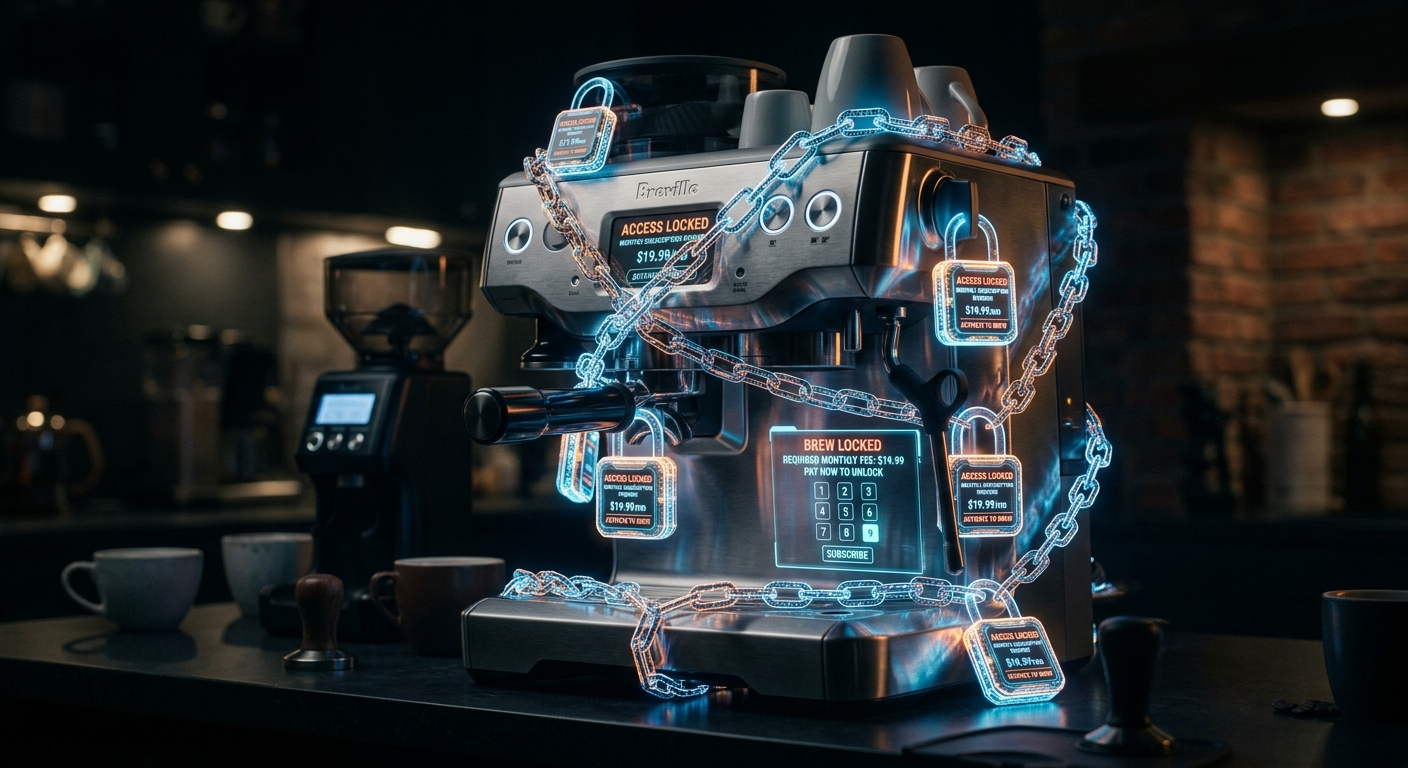
The most egregious evolution of the subscription model is hardware extortion. Companies are now building physical products with the functionality already built-in, and then using software to lock those features behind a paywall.

BMW famously tried to charge drivers a monthly subscription to use the heated seats that were already physically installed in the car they had purchased. Peloton sells you a stationary bike for $1,500, but if you don’t pay the $40/month subscription, the screen becomes a useless brick and you can’t even see your basic cadence metrics. You bought the hardware, but you are being held hostage by the software.
This fundamentally redefines the concept of private property. If a corporation can remotely disable a physical object sitting in your living room or your driveway because your credit card expired, do you actually own that object? The answer is no. You are merely renting the privilege of accessing it.
The Death by a Thousand Cuts
The psychology of the subscription model relies on the idea that $9.99 isn’t a lot of money. And in isolation, it isn’t. But subscriptions don’t exist in isolation. They stack.
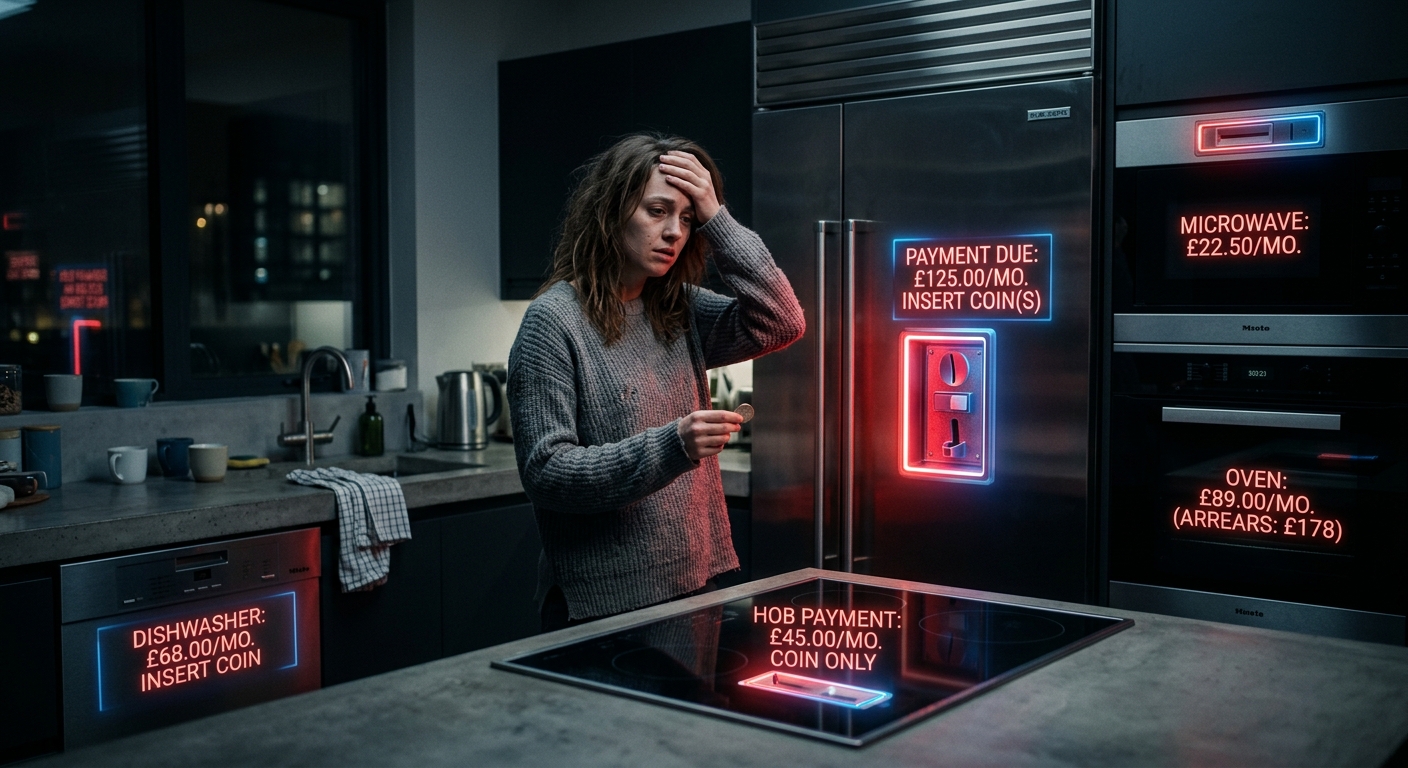
You have the streaming services. Then the premium music app. Then the cloud storage because your phone won’t let you back up photos for free anymore. Then the gym membership you forgot to cancel. Then the meal kit box. Then the premium dating app tier. Before you know it, you are hemorrhaging $400 a month in invisible, recurring fees.
This is the financial death by a thousand cuts. It keeps the middle class perpetually broke. You can’t build wealth when your bank account is treated like a public trough for fifty different tech startups to take a sip from every month. It creates a state of perpetual financial anxiety. You must maintain your income stream just to keep the lights on in your digital life.
The Illusion of Value
The companies justify this by claiming they are providing “continuous value” and “regular updates.” But let’s be real. Is Adobe Photoshop truly providing $20 worth of new features to the average user every single month? No. They are simply extracting rent because they have a monopoly on the industry standard.

The goal isn’t to provide value; the goal is to trap you in an ecosystem. The more subscriptions you have tied to an Apple ID or a Google account, the harder it is to leave. The friction of canceling, of losing your playlists, your saved files, and your customized settings, is so high that most people just sigh and let the auto-draft continue.
To explore more about how the modern economy is designed to keep you on a treadmill, read our deep dive on Society on Chains about the “Everything Rental” economy and the death of physical ownership.
Canceling the Culture
How do you break free? It requires a brutal, unsentimental audit of your life. Print out your bank statement. Look at every single recurring charge. Ask yourself: “Does this bring me joy, or am I just too lazy to find the ‘cancel’ button?”
Buy things outright whenever possible. Buy physical media. Buy software that offers a one-time perpetual license. If a car company tries to charge you a subscription for the engine to start, walk off the dealership lot.
We have to stop accepting the premise that our lives are a service provided by tech conglomerates. You are a citizen, not a user. Stop leasing your existence, and start owning it again.