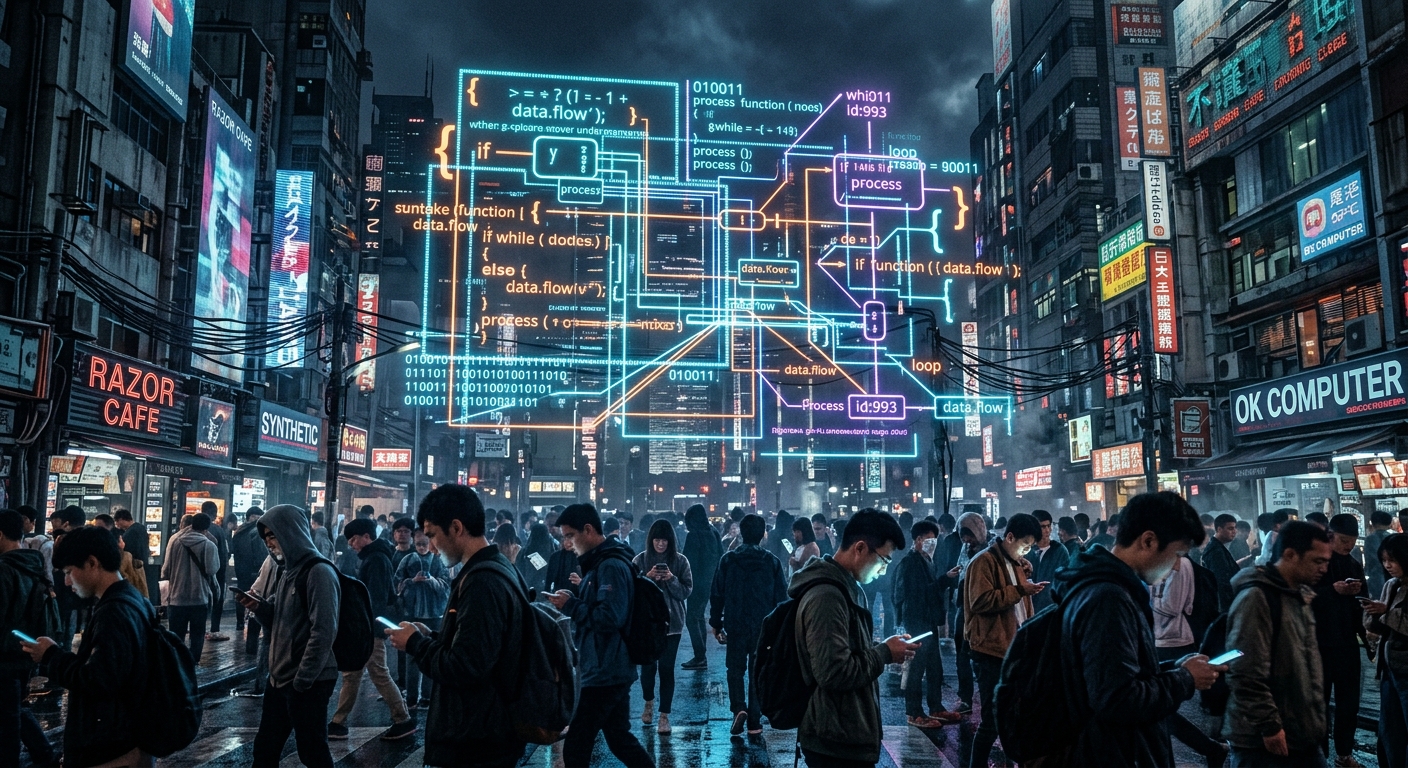
Picture this: You’re holding a glowing rectangle. It vibrates. Your pulse quickens. You swipe. You get a little burst of joy. Ten minutes later, you look up, and two hours have vanished into the abyss. Sound familiar? Welcome to your new cell, prisoner. Your warden isn’t a person with a baton-it’s an algorithm, and it’s built a jail without walls right inside your pocket.

The Architecture of the Invisible Prison
Prisons used to be straightforward. You commit a crime, you get a jumpsuit, you serve your time, and you leave. The modern digital jail is far more sophisticated. For starters, you built it yourself. You happily signed the Terms and Conditions-admit it, you didn’t read them-and handed over the keys.
The social media algorithm isn’t designed to lock your body away; it’s designed to lock your attention in. Attention is the new currency. In the old days, robbers held you up for your wallet. Today, Big Tech holds you up for your eyeballs.
And boy, are they good at it.
Every swipe, every like, every second you linger on a video of a cat falling off a counter is logged. The algorithm is learning. It’s mapping your desires, your fears, your political leanings, and your bizarre 3 AM fascinations with medieval woodworking. It’s not a feed; it’s a personalized Skinner box.
The Warden Needs You Hooked
The dopamine loop is the invisible chain connecting your brain to the server rack. Silicon Valley engineers studied casino slot machines to figure out how to keep you pulling the lever. Infinite scroll? That’s not a feature for your convenience. That’s the removal of stopping cues. In the physical world, a book has chapters. A TV show has credits. The endless feed has no bottom. The algorithm says, “Why leave? We have more.”
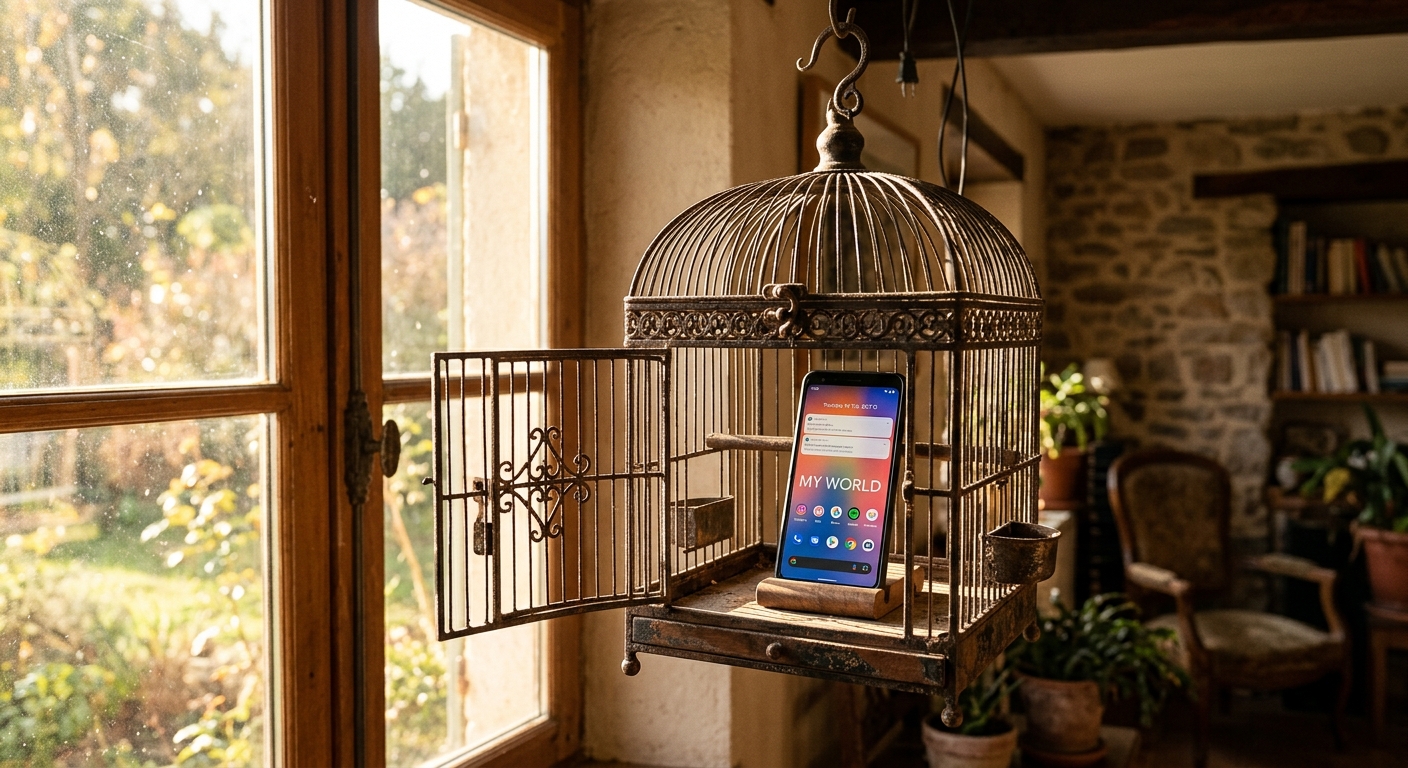
When the notification bell dings, your brain gets a hit of dopamine. Someone liked your tweet. Someone commented on your photo. You matter! The algorithm validates your existence. But the validation is fleeting, so you post again. And again. You’re trading your mental bandwidth for digital breadcrumbs.
We Are the Inmates and the Guards
Here’s the twisted part: We enforce the rules on each other. If you don’t post, do you even exist? If you don’t engage with the outrage of the day, are you complicit? We police each other’s tone, aesthetic, and opinions. The Panopticon is real, but instead of one guard watching everyone, we are all watching each other through the lens of our front-facing cameras.
The algorithm rewards outrage because outrage drives engagement. Anger is a high-arousal emotion. It makes you type furiously in the comments section. It makes you share the post. The warden doesn’t care if society is burning down outside the walls, as long as the engagement metrics are up.
If you want to understand how deep the programming goes, try taking a week off. Watch the withdrawal symptoms kick in. The phantom vibrations in your pocket. The instinct to reach for your phone when you have to endure three seconds of boredom in an elevator. We’ve outsourced our ability to be alone with our thoughts.
Breaking the Digital Chains
So, how do we stage a prison break? You can’t exactly blow a hole in the wall when the wall is made of code. But you can start by reclaiming your attention.
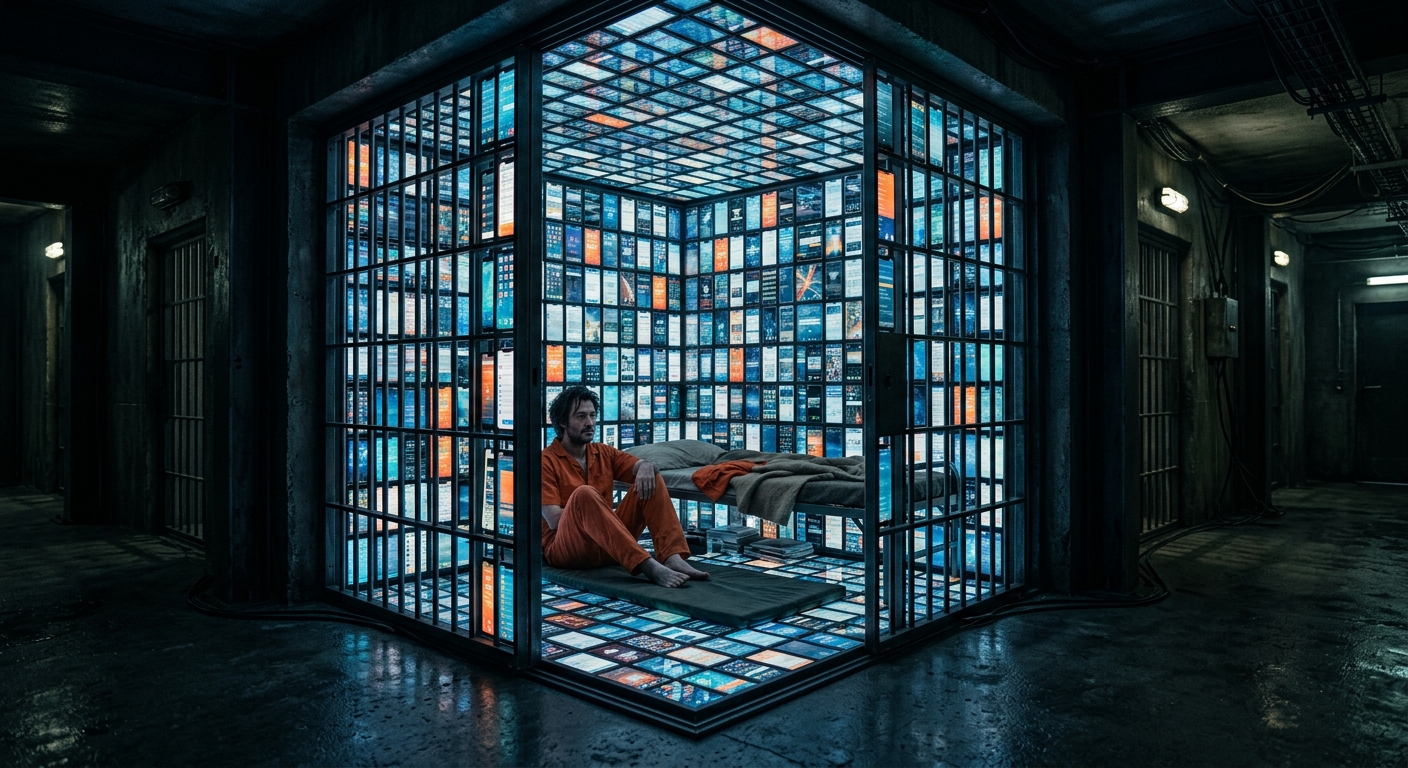
Turn off non-essential notifications. Put the phone in another room when you sleep. Read a physical book. Stare out a window and let your brain be bored for five minutes. Boredom is the birthplace of creativity. The algorithm hates boredom because it can’t monetize it.
We need to stop treating our attention like an infinite resource. It is finite, and it is precious. Every minute spent doomscrolling is a minute stolen from your actual life. The algorithm wants you to think the world inside the screen is the real world. It’s not. It’s a simulation designed to sell you things.
If you want to explore more about how modern society builds these invisible structures, check out our other deep dives on Society on Chains. We explore the hidden systems running our lives-and how to unplug from them.
The Verdict
The truth is, the algorithm is a brilliant piece of engineering, but it is fundamentally indifferent to human flourishing. It doesn’t care if you’re happy. It only cares that you’re logged in. We traded our freedom for convenience and connection, and we ended up with a jail without walls.
But the door isn’t locked. You just have to put down the glowing rectangle and walk out.